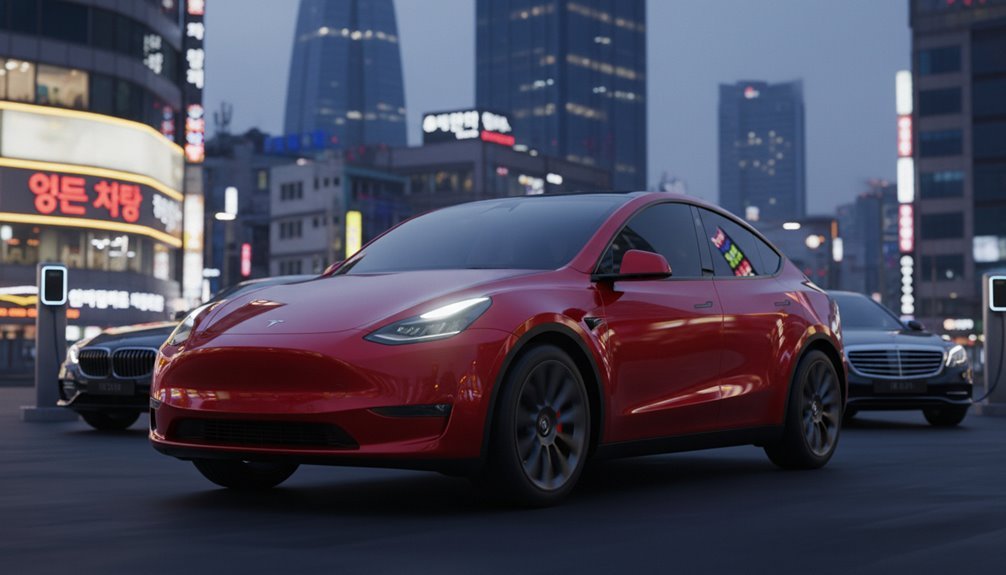

As demand for electric vehicles continues to surge, Tesla‘s claimed the top spot in South Korea’s imported car market during November 2025. The electric vehicle maker sold 7,632 units, beating German rivals BMW and Mercedes-Benz. BMW came in second with 6,526 units, while Mercedes-Benz placed third with 6,139 units.
Tesla’s November performance marked a major comeback. The company had briefly lost its market lead to BMW in October 2025 but reclaimed the position just one month later. This November surge represented 110.7% year-over-year growth compared to November 2024, when Tesla sold only 3,618 units.
Tesla reclaimed South Korea’s imported car market lead in November with 110.7% year-over-year growth, outselling BMW after losing position the prior month.
The achievement caps off an impressive year for Tesla in South Korea’s imported vehicle segment. From July through September 2025, Tesla held the top position for three consecutive months. September proved especially strong, with sales jumping 572.3% year-over-year to over 9,000 units. Through October 2025, Tesla had sold 47,941 vehicles in Korea, up 61.1% from the same period in 2024. Tesla’s established partnerships for local service and charging infrastructure have strengthened its competitive position in the region. South Korea’s total automotive market reached 1.38 million units by October, indicating robust overall demand across all vehicle segments.
Tesla’s Model Y led the charge in November, selling 6,180 units and cementing its status as the market’s top-selling model. The Mercedes E-Class came in second with 2,790 units, while BMW’s 5 Series placed third with 1,853 units. Tesla’s Model 3 secured fourth position with 1,412 units sold. Meanwhile, Audi’s sales growth of 43.3% demonstrates that other premium brands are also capturing meaningful market share in the competitive import segment. German automakers collectively sold 155,292 units during the first 11 months of 2025, maintaining their dominance across the broader import market.
Several factors fueled Tesla’s dominance. Nearly all Teslas sold in Korea—about 99.7%—are manufactured at Tesla’s Shanghai Gigafactory in China. This production strategy considerably lowered prices for Korean consumers compared to U.S. imports. Furthermore, shorter delivery times and competitive pricing allowed Tesla to undercut established German competitors on comparable models. Tesla’s advanced driver-assistance technology provides additional competitive advantages beyond pricing alone. Strong resale value retention compared to traditional luxury cars makes Tesla vehicles particularly attractive to Korean consumers considering long-term ownership costs.
The broader Korean EV market‘s expansion also benefited Tesla. The entire electric vehicle segment grew 56.3% through October 2025. Today, one in every five electric vehicles sold in Korea is a Model Y, reflecting the brand’s strong appeal.
Tesla’s market victory in November raises questions about foreign competition‘s growing influence in South Korea’s automotive industry. The company’s combination of affordable pricing, quick delivery, and advanced technology continues reshaping consumer preferences in the premium import segment.