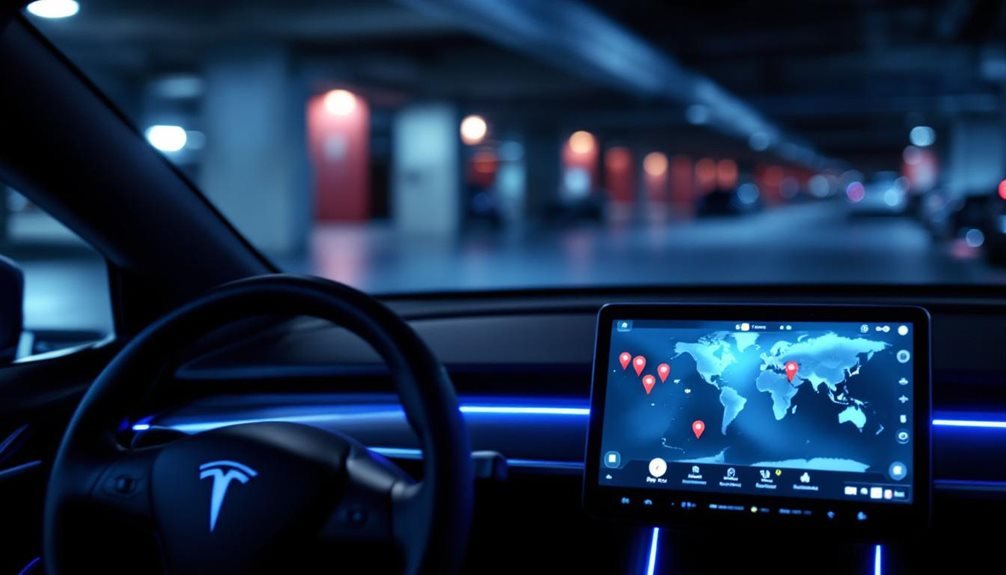

How did the personal locations of over 1,300 Tesla owners end up exposed on the internet? A security researcher uncovered that TeslaMate servers worldwide were leaking sensitive vehicle data without any password protection. These unsecured dashboards revealed real-time GPS locations, trip histories, and charging station visits of Tesla owners across multiple countries.
TeslaMate is a popular self-hosted data logger that Tesla owners use to track their vehicle’s performance and statistics. However, many users didn’t properly secure their servers, leaving them open to anyone on the internet. The exposed data included continuous GPS tracking that showed exactly where vehicles were at any moment. It also revealed detailed travel patterns, daily routines, and frequently visited destinations.
Many TeslaMate users left servers unsecured, exposing real-time GPS locations and detailed travel patterns to anyone online.
The security implications are serious. Criminals could use this information to know when someone’s away from home, making burglary easier. They could track owners to isolated areas for vehicle theft or follow family members’ regular routes. The data exposed residential addresses and showed when people typically leave for work or return home. Tesla’s Sentry Mode surveillance system, while effective at documenting security incidents around parked vehicles, cannot protect against this type of remote data exposure.
This isn’t Tesla’s only security concern. Researchers recently found a vulnerability called CVE-2025-2082 in the Model 3’s tire pressure monitoring system. This flaw allowed hackers to run malicious code on the vehicle without any action from the owner. The Vehicle Controller Secondary module had an integer overflow problem that bypassed security protections. Attackers could exploit this through Bluetooth-enabled sensors to gain unauthorized control over critical vehicle functions. The vulnerability received a CVSS 7.5 severity rating, indicating a high-risk security issue. The flaw was discovered by Synacktiv researchers during the Pwn2Own 2025 hacking competition.
Other attack methods have targeted Tesla accounts through phishing schemes and man-in-the-middle attacks. Hackers have manipulated certificate authentication during sensor pairing and created fake phone keys. Tesla’s Wall Connector charging equipment also had vulnerabilities that allowed firmware downgrade attacks.
Tesla addressed the tire pressure monitoring vulnerability through an over-the-air update in October 2024. They’ve implemented anti-downgrade mechanisms to prevent firmware rollback exploitation. The Wall Connector issue was fixed in Firmware Version 24.44.3.
These incidents highlight growing concerns about connected vehicle security. As cars become more computerized, they’re creating new opportunities for hackers. The TeslaMate exposure shows that even third-party tools can compromise vehicle owner privacy when they’re not properly configured.