Tesla Powerwall installation isn’t a weekend DIY project—only certified installers can touch it without voiding warranties. The concrete wall needs 38 inches of lateral clearance, specific height restrictions, and precise spacing requirements. Electrical permits are typically mandatory, and UL compliance demands indoor rooms measure at least 4x4x8 feet. The system requires 8 inches on the left for wiring safety, plus exhaust clearances. Structural support, flood zone avoidance, and proper electrical configurations determine whether your backup power dreams become reality or expensive disappointment. Additionally, it’s important to factor in the tesla wall charger installation expenses, which can vary significantly based on existing electrical infrastructure and location. Homeowners should also consider potential upgrades to their electrical systems to accommodate both the Powerwall and the charger, further impacting overall costs. Careful planning and budgeting can turn the investment into a valuable asset rather than an unforeseen financial burden.
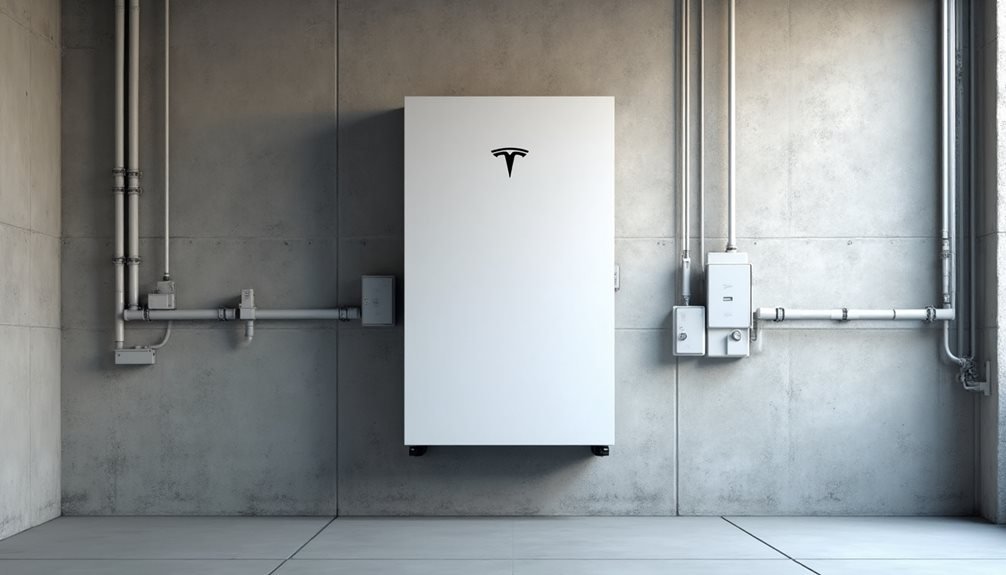
A concrete wall stares back at the homeowner, soon to bear the weight of Tesla’s sleek energy storage solution. The installation process demands precision. No room for error when dealing with high-voltage systems.
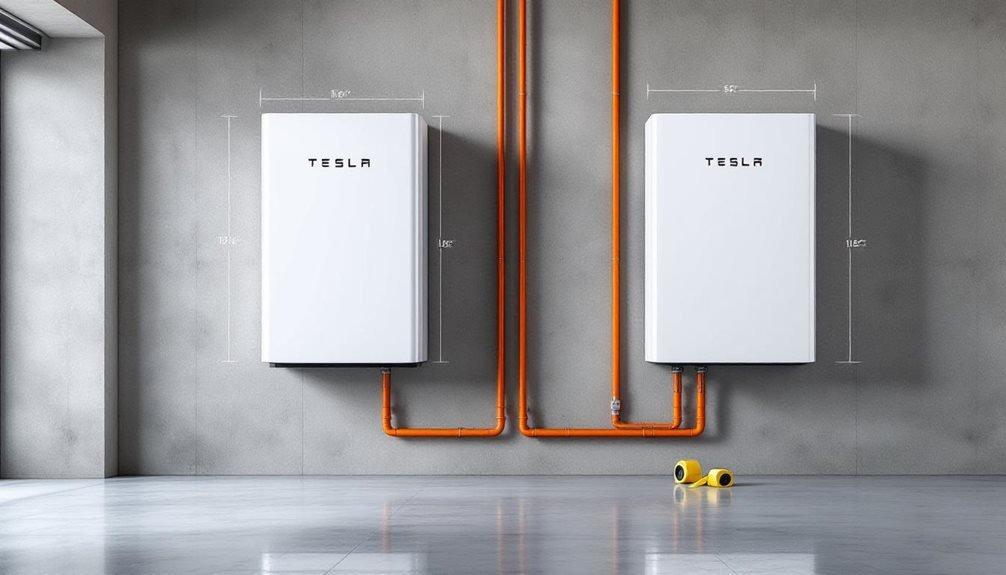
Space requirements aren’t negotiable. The unit needs 38 inches of lateral wall clearance and must sit no higher than 39.5 inches from ground to bottom. Indoor installations require a 4x4x8 foot room minimum for UL compliance. The wall better be flat—Tesla demands a maximum slope of plus or minus two degrees side-to-side.
Eight inches of working space on the left keeps electricians from getting zapped during wiring. A minimum of 200mm clearance must be maintained on the left side to meet proper installation standards.
Only Tesla-certified installers touch these systems. Period. Homeowners who think they’re handy enough to DIY just voided their warranty. Most local jurisdictions require an electrical permit for the installation to ensure compliance with safety standards and building codes.
The structural requirements are straightforward: wood, concrete, or metal studs that can actually support the weight. Common sense says avoid flood zones and driveways where cars might ram into expensive batteries.
Clearance specifications read like a cramped apartment lease. Two inches on the left for air intake, six inches on the right for exhaust. Multiple units need ten inches between them because apparently batteries need personal space too. Above single units, two inches suffices, but side-by-side installations demand twelve inches overhead. These aren’t suggestions—they’re UL 9540A requirements.
The electrical work gets technical fast. Neutral-ground bonding straps, circuit breaker labeling, and Backup Gateway synchronization all fall under Tesla’s wiring diagrams. Multi-unit systems require serial or parallel connections depending on the setup. Local electrical codes still apply, naturally. For those navigating the complexities of installation, it’s crucial to consult experienced professionals familiar with Tesla’s requirements to ensure compliance and safety. Additionally, researching buying a Tesla tips can help potential owners make informed decisions about home infrastructure before making a purchase. Understanding the specific electrical needs can save time, money, and potential headaches in the long run.
Noise levels resemble refrigerator hums most of the time. Temperature extremes and high discharge rates crank up the decibels. Bedrooms probably aren’t ideal locations unless the homeowner enjoys mechanical lullabies.
Post-installation involves Wi-Fi or ethernet connections for remote monitoring. Tesla’s firmware updates happen automatically through their portal. Boot-up sequences, circuit testing, and documentation reviews wrap up the process. The installer must document important information including serial numbers from the equipment labels for warranty and service purposes.
The concrete wall now holds thousands of dollars in lithium-ion technology, quietly storing electricity until the next power outage proves its worth.
Frequently Asked Questions
How Long Does a Tesla Powerwall Battery Last Before Needing Replacement?
A Tesla Powerwall typically lasts 20-25 years before replacement becomes necessary. The 10-year warranty guarantees 70% capacity retention, which marks the unofficial end-of-life threshold.
Heavy daily cycling shortens lifespan, while partial use extends it. After a decade, the battery still holds roughly 70% of original performance—enough for basic backup needs.
Temperature extremes and undersized systems accelerate degradation. Most homeowners won’t need replacement for two decades.
Can I Install Multiple Powerwalls to Increase My Home’s Backup Capacity?
Yes, homeowners can stack up to 10 Powerwalls in a single system. Each unit adds 13.5 kWh storage and enhances continuous power output.
More units mean longer backup duration and coverage for additional circuits.
There’s a catch though – systems with multiple Powerwalls must be ground-installed for safety.
Tesla provides stacking kits to save space.
All units need to be the same model for compatibility.
What Happens to My Powerwall Warranty if I Move Houses?
Moving houses with a Powerwall gets complicated fast. The warranty transfers to new homeowners if the unit stays put at the original location. But here’s the kicker – moving the Powerwall itself? That voids the warranty completely.
The only exception is leased systems or PPAs, where relocation might be allowed. Tesla needs proof of ownership transfer and serial numbers for any warranty transfer.
Does the Powerwall Work During Winter or in Extremely Cold Climates?
Tesla Powerwalls work in winter and extreme cold, though they’re not exactly thrilled about it. The system operates from -20°C to 50°C, with internal heating that kicks in automatically.
Power gets reduced in brutal cold because the battery prioritizes staying warm over maximum output.
Denver units kept running at -23°C, below official ratings. Indoor installation helps during long outages.
How Much Does Tesla Powerwall Installation Typically Cost Including Labor Fees?
Tesla Powerwall installation typically runs $15,400 for a single unit, all in.
That breaks down to $8,200 for the Powerwall 3, $900 for the required Gateway, $200 in accessories, and roughly $6,100 in labor.
Pretty steep.
The national average hits $21,200 though, with costs ranging wildly from $12,850 to $29,550 depending on your home’s complexity and location.