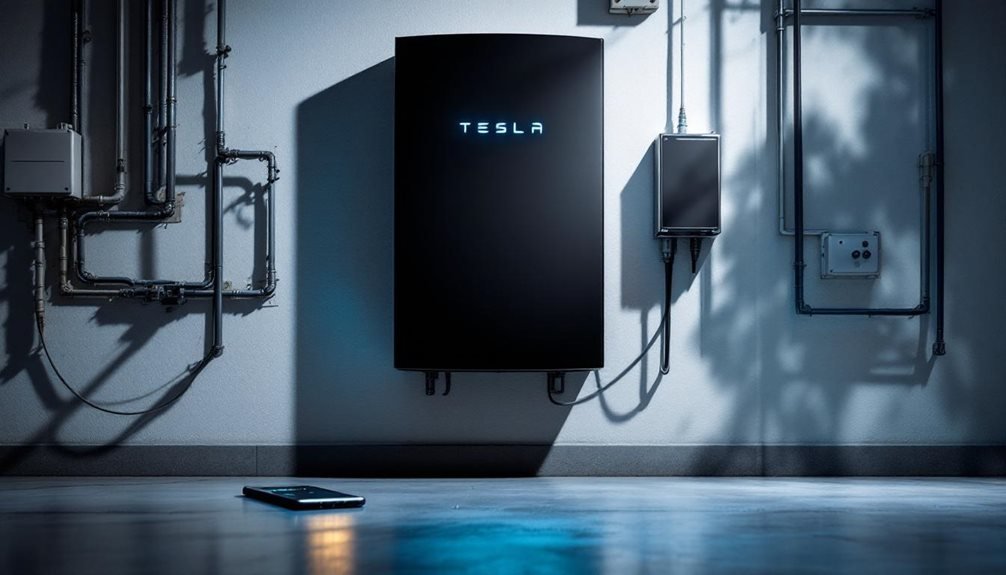

Tesla’s tightening control over Powerwall battery software through frequent updates has created unexpected problems for homeowners who rely on these energy storage systems. Recent firmware releases, including version 25.18.2, have caused backup reserve settings to reset without warning, leaving users vulnerable during power outages.
The backup reserve feature lets homeowners set aside battery power for emergencies. Users typically choose between 0%, 50%, or 100% reserve levels. But after software updates, many find their carefully chosen settings have vanished. One frustrated owner reported their 50% reserve setting dropped to 0% without any action on their part.
Tesla pushes these updates automatically, often without explaining what’s changed. While the company promotes new features like Storm Watch scheduling and the Opticaster algorithm, they rarely mention fixing backup reserve bugs in their release notes. This lack of transparency frustrates users who depend on reliable backup power. Starting with firmware version 25.10.1, Tesla has also blocked local access to TEDAPI on Powerwall, further limiting user control over their systems.
Tesla rarely mentions fixing backup reserve bugs while promoting new features, frustrating users who depend on reliable backup power.
The problems don’t stop at reset settings. The Tesla app sometimes shows different backup percentages than the Powerwall Gateway display. During power discharge, the system may suddenly reset to minimum thresholds, ignoring user preferences. Some updates even prioritize selling solar power back to the grid over maintaining emergency reserves. The April 2025 updates included Opticaster improvements that delay grid charging to maximize solar charging, but this can conflict with maintaining adequate backup reserves.
These issues affect different Powerwall models unequally. The newer Powerwall 3 gets exclusive features like a 15.4 kW off-grid power limit and Heat Mode. Meanwhile, owners of older models feel left behind as their systems receive fewer improvements and continue experiencing unresolved bugs.
Tech-savvy users have turned to third-party tools for solutions. The pyPowerwall library helps mask data gaps during updates. Some create scheduled routines through home control systems to restore their backup settings after each update. But these workarounds shouldn’t be necessary for a premium energy storage product.
Tesla introduced a History feature in app version 4.38.0 to track configuration changes. However, this doesn’t solve the core problem of settings disappearing unexpectedly.
As firmware updates roll out across different regions at varying speeds, users face an unpredictable patchwork of software versions and behaviors. Until Tesla addresses these fundamental issues, Powerwall owners must remain vigilant about checking their backup reserves after every update.