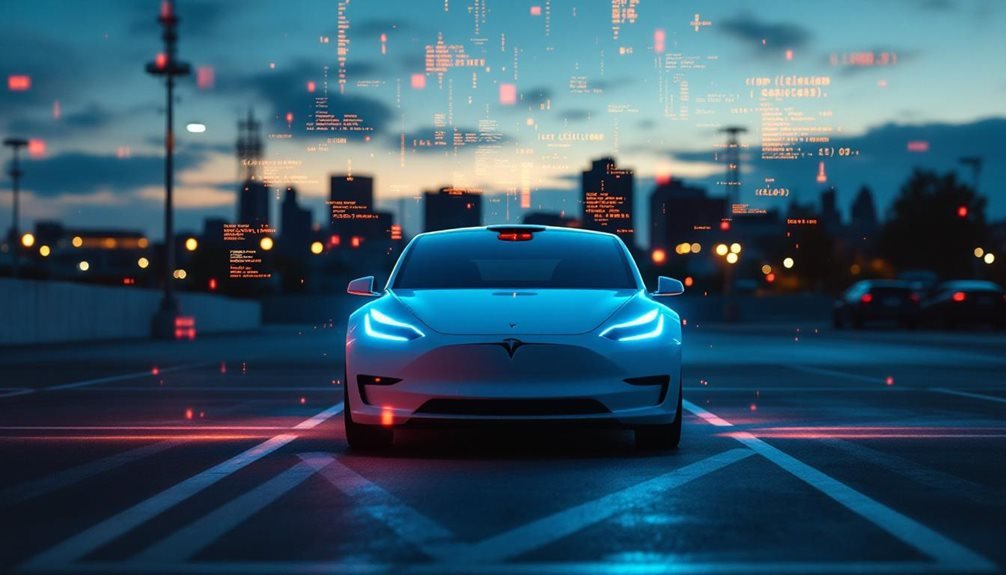

How secure are Tesla’s new robotaxis? The company’s working hard to ascertain. As Tesla prepares to launch its autonomous vehicle service in Austin, Texas, cybersecurity experts warn that hackers could potentially take control of these self-driving cars without ever touching them.
The threat’s serious. A single security breach could shut down an entire city’s transportation network. These vehicles share data constantly, making them vulnerable to cyber attacks. If hackers break in, they could endanger passengers by messing with the car’s operations through malicious data interference.
Tesla’s taking multiple steps to protect its robotaxis. The company uses smart sensors and monitoring systems to catch anyone trying to access charging stations or vehicles without permission. Their Full Self-Driving technology gets regular updates through secure data channels. These over-the-air updates let Tesla fix security problems quickly when they’re identified.
Tesla deploys smart sensors, secure updates, and real-time monitoring to shield robotaxis from cyber threats.
The vehicles use special protection called AutoCrypt V2X to keep their communications safe from tampering. This system encrypts data when cars talk to traffic lights, other vehicles, and control centers. Tesla also runs penetration tests, where security experts try to hack the systems to find weak spots before real criminals do.
But Tesla’s playing catch-up with competitors. Waymo already operates robotaxis without safety drivers in some U.S. cities. Chinese companies Baidu and Pony.ai have fully autonomous passenger services running. These rivals use advanced security protocols that Tesla must match or beat. To close the gap, Tesla is heavily investing in research and development to enhance its offerings. The company is focusing on improving its ‘Tesla robotaxi brain technology’ to ensure it can operate safely and efficiently in urban environments. As Tesla strives to innovate, the pressure is on to not only meet regulatory standards but to exceed the capabilities of its competitors.
The company’s working with government regulators to meet safety standards. They’re following ISO automotive cybersecurity rules and staying transparent about any security incidents. This cooperation helps build trust with both authorities and future passengers. A recent survey found that 71% of respondents remain reluctant to ride in robotaxis due to safety concerns.
Tesla’s security approach combines physical and digital protection. Their machine learning systems constantly analyze threats across power grids, charging infrastructure, and the vehicles themselves. The company uses secure coding practices and builds backup systems to keep cars safe even if hackers partially succeed.
As robotaxis prepare to hit Austin’s streets, the race between Tesla’s security teams and potential hackers continues. The stakes couldn’t be higher for passenger safety and the future of autonomous transportation. Tesla plans to expand to several major U.S. cities by the end of 2025, making comprehensive security measures even more critical. In tandem with these advancements, Tesla is also unveiling more details about its vision for urban mobility, as highlighted in ‘tesla’s robotaxi map explained.’ This strategic plan emphasizes the importance of efficient routing and real-time data analysis to enhance security and operational effectiveness. As competition intensifies, maintaining a lead in technology and safety protocols will be essential for gaining consumer trust and ensuring widespread adoption.