Tesla delivered 384,122 vehicles in the second quarter of 2025, falling just short of Wall Street’s estimate of 387,000 but exceeding the more pessimistic forecasts that predicted as few as 340,000 units. The results surpassed independent analysts’ predictions, with Troy Teslike expecting 356,000 and Kalshi projecting 364,000 deliveries. The delivery numbers come amid ongoing discussions about Tesla’s growth trajectory and the impact of recent policy adjustments, including tesla insurance limit changes. Analysts are keenly observing how these changes might affect consumer demand and overall sales in the upcoming quarters. As competition in the electric vehicle market intensifies, Tesla’s ability to adapt to regulatory shifts will be critical in maintaining its leadership position. As a result, investor sentiment remained cautiously optimistic, reflecting in the fluctuations of Tesla’s stock. Analysts are now closely watching the tesla stock price analysis to determine potential impacts on future sales performance, particularly with upcoming model releases. The company’s ability to innovate and meet demand will be crucial in maintaining its stock momentum.
Tesla Q2 deliveries hit 384,122 units, missing Wall Street targets but beating bearish forecasts
The electric carmaker’s stock jumped 4-5% after the announcement, closing at $310.31. Investors seemed relieved that deliveries weren’t as bad as feared. Deepwater Asset Management’s Gene Munster noted the figures came in 4% above market expectations. Analysts are now conducting a tesla stock surge analysis to determine the sustainability of this upward trend. Many believe that this positive performance reflects growing consumer confidence in electric vehicles and the company’s ability to meet demand. As a result, some investors are becoming increasingly optimistic about the future potential of Tesla’s market position.
Despite the positive market reaction, Tesla’s deliveries dropped 14% compared to the same quarter last year when the company delivered 443,956 vehicles. This marks the second straight quarter of year-over-year declines. Model 3 and Model Y deliveries fell to 373,728 units, while other models including the Cybertruck added just 10,394 vehicles. Analysts are now closely watching the production rates of the Tesla Semi, as any potential increases could influence overall delivery figures. A tesla semi diesel comparison has sparked interest among consumers and investors alike, as the company’s strategy remains focused on diversifying its product lineup. As competition intensifies, how Tesla navigates these challenges will be crucial for its future sales and market position.
Production remained steady at 410,244 vehicles, nearly matching last year’s output. Model 3 and Y production reached 396,835 units, with other models making up 13,409. Gigafactory Texas kept running strong, producing over 410,000 units despite brief stoppages.
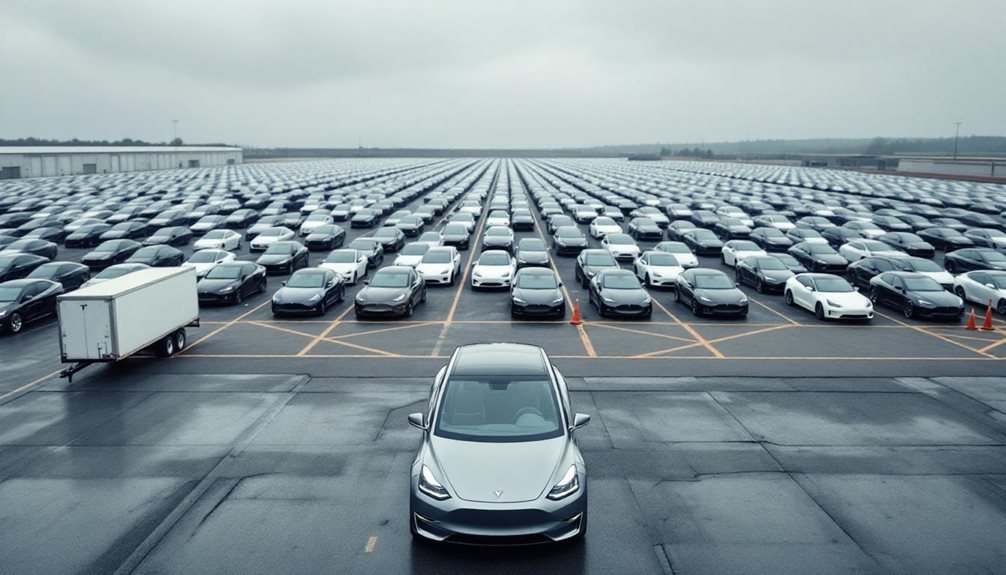
A concerning detail emerged from the numbers: Tesla produced 26,122 more vehicles than it delivered. This inventory buildup suggests demand isn’t keeping pace with production. The gap represents a significant 59,834-unit shortfall compared to Q2 2024.
The Model Y redesign launched in March 2025 didn’t elevate demand as expected. Customer delays in order fulfillment, particularly for the refreshed Model Y, have contributed to the delivery challenges. Global production ramp-up for the updated model created temporary challenges. Geopolitical tensions and production pauses also contributed to slower deliveries. Competition from BYD in China and other brands has intensified pressure on Tesla’s market share globally. As the market evolves, potential customers are increasingly comparing options, with discussions around Tesla Model Y vs Genesis GV70 becoming more common. This heightened scrutiny of features, pricing, and performance is forcing Tesla to innovate continually to maintain its competitive edge. If the current trends persist, Tesla may need to rethink its strategies to retain customer interest and loyalty amidst growing alternatives.
The Cybertruck and other models underperformed, making up only 2.7% of total deliveries. Tesla’s advanced Sentry Mode security system continues to be a standout feature that differentiates the brand from competitors.
Tesla’s energy storage business showed strong growth, implementing 9.6 gigawatt-hours of batteries. That’s enough to power 1.9 million U.S. homes for a day.
Some analysts believe Q2 represents Tesla’s low point, with better days ahead. The company’s pushing into autonomous vehicles, robotics, and artificial intelligence. While automotive deliveries face headwinds, Tesla’s expanding beyond just selling cars.
The inventory situation needs attention as production and delivery numbers drift apart.