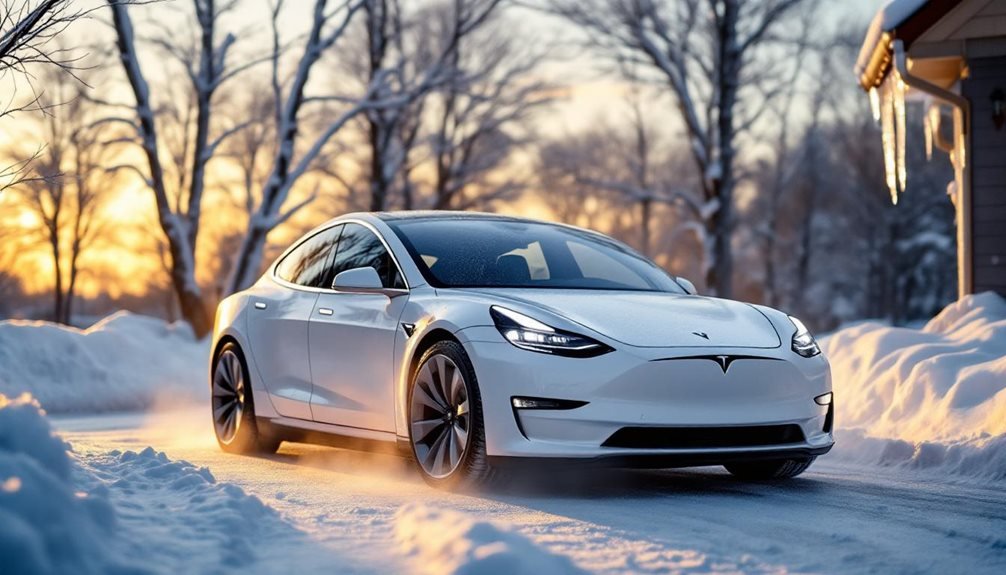
Tesla’s winter performance is brutally honest about cold weather reality. Range drops to roughly 59% at zero degrees Fahrenheit, metamorphosing a 330-mile promise into a chilly 195-mile truth. The cabin heating system mercilessly drains the battery while Tesla’s dashboard pretends everything’s fine with static range estimates. Charging times crawl slower than frozen molasses. Here’s the plot twist though: cold weather actually helps long-term battery health, creating an interesting trade-off worth investigating further.
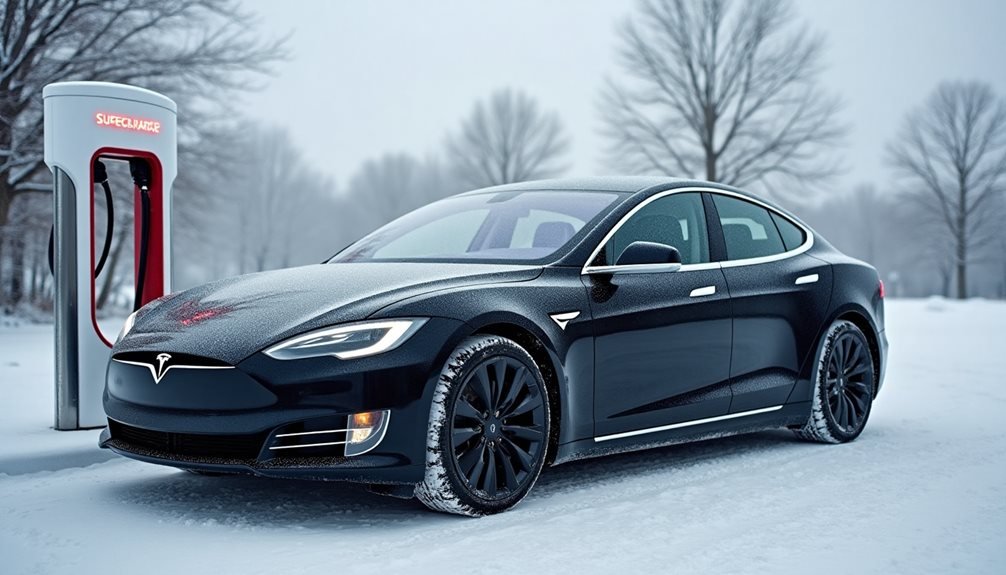
How does Tesla’s fancy electric vehicle handle when winter decides to show up uninvited? Well, it’s complicated. Tesla batteries face an interesting paradox when temperatures drop. Sure, your immediate driving range takes a beating, but the long-term health of your battery actually improves in colder climates.
Data from over 12,500 Tesla vehicles reveals that cars in colder regions show better battery retention over time. Coastal areas with lower temperatures and controlled humidity demonstrate higher Range Scores than their hot-weather counterparts. Cold weather slows the chemical degradation in lithium-ion batteries. Who knew winter could be battery therapy?
But here’s the catch. When winter hits hard, your immediate range drops like a rock. At zero degrees Fahrenheit, Tesla range plummets to roughly 59% of advertised capacity. That 330-mile range suddenly becomes 195 miles. Ouch. Cabin heating devours energy, and the battery simply hates the cold.
Tesla’s dashboard doesn’t help much either. Unlike competitors such as the Chevy Bolt, Tesla uses fixed efficiency calculations that don’t adjust for climate variables. Your dashboard cheerfully displays the same range estimate while reality tells a different story. Other EVs typically show their range estimates dynamically changing based on external temperatures.
The computer might drop your state of charge display by up to 3% overnight just to account for cold penalties. Real-world range can drop by 30% in sub-zero temperatures. Summer tires on ice? Good luck with that.
Long-distance trips require serious charging strategy adjustments. The heating system pulls directly from the high-voltage battery, accelerating drain faster than your patience in traffic. Charging speeds decrease significantly when temperatures fall below optimal levels, requiring more time at charging stations.
Preheating helps. A lot. Warming the battery before departure improves efficiency and brings range estimates closer to reality. Garage preheating can bump retention from 59% to 60%. Not exactly revolutionary, but every mile counts when you’re watching range disappear. Tesla’s computer software effectively minimizes slippage and maintains vehicle stability even when winter conditions challenge your driving routine.
Heat pumps work more efficiently than resistive heating, though heated seats beat cranking up cabin air temperature. Maintaining consistent temperatures reduces excess drain compared to constant adjustments.
The silver lining? Cold climate usage correlates with slower battery degradation over time. Winter might steal your immediate range, but it’s secretly preserving your battery’s future.
Tesla’s cold weather performance remains a trade-off between today’s convenience and tomorrow’s longevity.
Frequently Asked Questions
Does Tesla’s Cold Weather Performance Vary Between Different Models Like Model S Vs Model 3?
Tesla’s cold weather performance definitely varies between models. The Model S loses about 16% range at -19°C, dropping to 329 miles.
Meanwhile, the Model 3 sees 10-20% reduction, falling from 300+ miles to around 240-270 miles.
Both use the same thermal management tech, but Model S simply starts with more range to burn.
Size matters, apparently.
Can Preheating the Cabin While Plugged in Help Preserve Battery Range in Winter?
Preheating the cabin while plugged in absolutely helps preserve winter range.
When connected to external power, Tesla uses grid electricity to warm both cabin and battery instead of draining stored charge. This smart energy allocation means less battery power gets wasted on heating systems during actual driving.
Scheduled preconditioning through the app maximizes this benefit, ensuring ideal battery temperature without touching precious stored energy.
How Does Snow and Ice Accumulation Affect Tesla’s Autopilot and Safety Features?
Snow and ice wreak havoc on Tesla’s autopilot systems. Camera clarity drops, sensors get blocked by ice buildup, and lane markings disappear under snow. The car struggles to detect obstacles, fails to adjust speed automatically, and can’t distinguish between road and ice patches.
Snow glare confuses sensors, causing false readings. Smart Summon becomes practically useless in snowy parking lots, often requiring immediate manual takeover.
What’s the Optimal Garage Temperature for Storing a Tesla During Winter Months?
The ideal garage temperature sits above freezing, ideally 0°C or 32°F. Tesla batteries hate prolonged cold stress below -5.6°C (22°F) – that’s when things get ugly.
Above freezing minimizes energy loss and keeps the battery happy. Insulated garages work wonders, even unheated ones.
The goal is thermal stability, not tropical warmth. Cold batteries are cranky batteries, and nobody wants that drama.
Do Winter Tires Significantly Impact Tesla’s Already Reduced Cold Weather Driving Range?
Winter tires barely touch Tesla’s cold weather range loss. The battery’s thermal struggles dominate everything — we’re talking 15-39% range drops from heating systems and sluggish chemistry.
Tires? Maybe 1-3% efficiency loss, which is basically noise compared to the battery’s drama. One owner saw 41% range loss at zero degrees with snow tires, but that’s the battery throwing its tantrum, not the rubber.