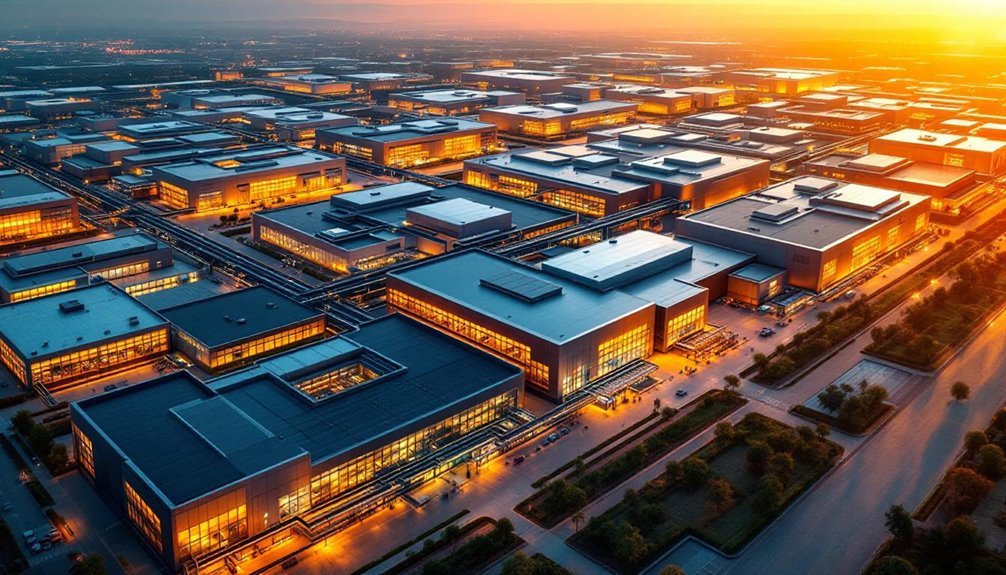
Tesla’s pushing forward with an ambitious plan to build its own massive chip factory, called TeraFab, to power its self-driving cars and robots. The company believes that existing chip manufacturers like TSMC and Samsung can’t produce enough processors to meet Tesla‘s future needs. Even though TSMC made about 1.42 million wafer starts monthly in 2024, Tesla says that’s still not enough.
The tech company’s chip roadmap shows the AI5 processor hitting low-volume production in 2026, with mass production arriving in 2027. The AI6 chip will follow, starting volume manufacturing in mid-2028. Tesla designed both chips specifically for autonomous driving. The AI6 will deliver roughly double the performance of the AI5.
Tesla’s new chips will consume about one-third the power of Nvidia’s Blackwell processors while costing roughly one-tenth as much to manufacture. These advantages give Tesla a competitive edge. The chips are built specifically for Tesla’s own software and designed for both vehicles and robots.
The TeraFab facility represents a dramatic shift in Tesla’s strategy. The factory would start producing 100,000 wafer starts monthly, then scale up to one million monthly. That’d make Tesla one of the world’s largest chip manufacturers. Few automotive companies operate their own semiconductor factories, making this move unusual for the industry. Elon Musk has also raised the prospect of partnering with Intel on new chip manufacturing capacity. Building an advanced chip manufacturing facility demands specialized tool vendors with long lead times and years of experience to acquire equipment.
Tesla’s current approach includes dual-sourcing the AI5 with both TSMC and Samsung. However, the company views vertical integration—controlling its own manufacturing—as necessary for long-term supply security. The shift toward becoming an integrated device manufacturer marks a significant departure from how traditional automakers operate. This strategy mirrors Tesla’s approach to parts sales, where the company maintains strict control over its supply chain rather than relying on external distributors.
The strategic decision comes as shareholders approved a $1 trillion executive compensation package during Tesla’s annual meeting. That package spans ten years and reflects confidence in Tesla’s transformation into an AI and robotics company. During those same proceedings, Tesla’s leadership discussed the chip manufacturing plans.
This move would unsettle automotive supply chains and reshape the semiconductor industry. Tesla’s massive production scale and power-efficient designs could fundamentally change how the industry operates. The company’s bet on building TeraFab signals serious commitment to controlling its technological future rather than depending on outside suppliers.