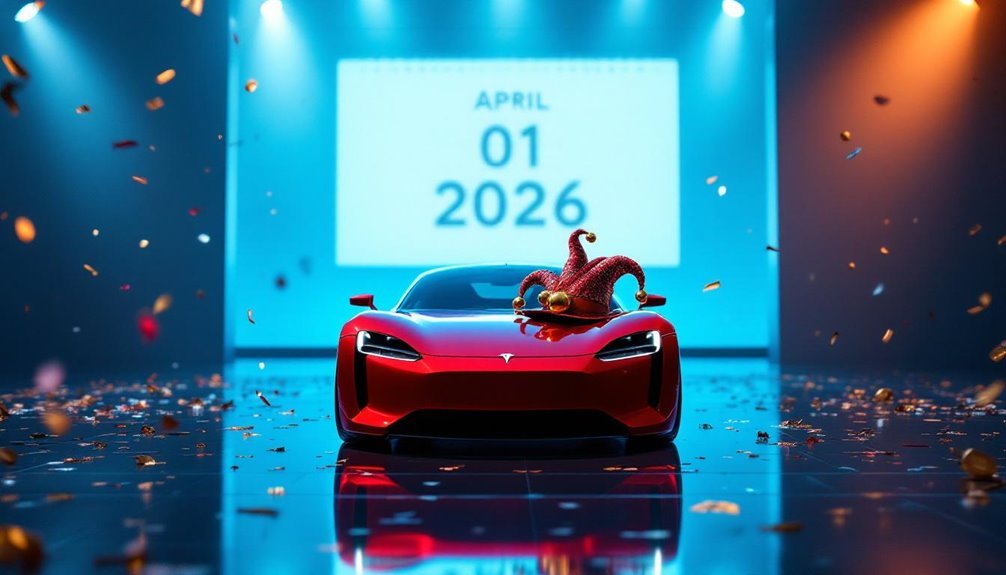
How serious is Elon Musk about the Tesla Roadster’s new deadline? That’s the question many are asking after Tesla announced an April 1, 2026 reveal date during a November 2025 shareholder meeting. The timing raises eyebrows because April Fools’ Day is known for jokes and pranks.
Tesla’s April 1, 2026 Roadster reveal date raises serious questions about whether the announcement is genuine or merely an elaborate April Fools’ prank.
Musk himself acknowledged the unusual choice. According to the facts presented, he framed the date selection for “deniability” in case of future delays. He even said he could claim he “was just kidding” if the timeline slips again. This candid admission has made many people skeptical about whether the company will actually meet this deadline.
The Roadster’s history supports that skepticism. Tesla first showed off the vehicle in 2017 and promised a 2020 release. That didn’t happen. Now, nearly nine years later, the company is targeting 2026 for a demo and 2027 or 2028 for actual production. Early customers who reserved the car back in 2017 are still waiting. The announcement came shortly after Musk received approval for a $1 trillion pay package tied to meeting specific metrics and sales goals. Design work only ramped up substantially this summer after being largely paused for more than a year, suggesting accelerated development timelines may still face significant hurdles. Musk previously confirmed the production version will be very different from earlier showings, hinting at substantial design changes still underway.
The pattern continues to repeat. Just weeks before the April 2026 announcement, Musk appeared on a podcast and promised a 2025 demo. That commitment was quickly abandoned. Multiple missed deadlines over the years have made the automotive industry and consumers question Tesla’s ability to deliver on timeline promises.
What’s interesting is that Tesla isn’t hiding the extended gap anymore. The company formally confirmed to shareholders that production won’t begin until 12 to 18 months after the reveal. That’s standard for developing new cars, but it also means the public shouldn’t expect to buy a Roadster for several years.
Musk has also made some bold claims about the vehicle. He’s suggested it might have “flying” capability and described it as potentially exceeding “all James Bond vehicles combined.” He’s even questioned whether the final version “might not even be a car.” These statements add to the confusion about what consumers will actually get.
Media coverage has highlighted the irony of announcing a major deadline on April Fools’ Day. Many news outlets called it “the most honest admission” Musk has made about missing timelines. Whether that honesty translates into actual delivery remains to be seen. Tesla’s commitment to continuous improvement through regular software updates means the eventual Roadster will likely receive ongoing enhancements after its initial release.