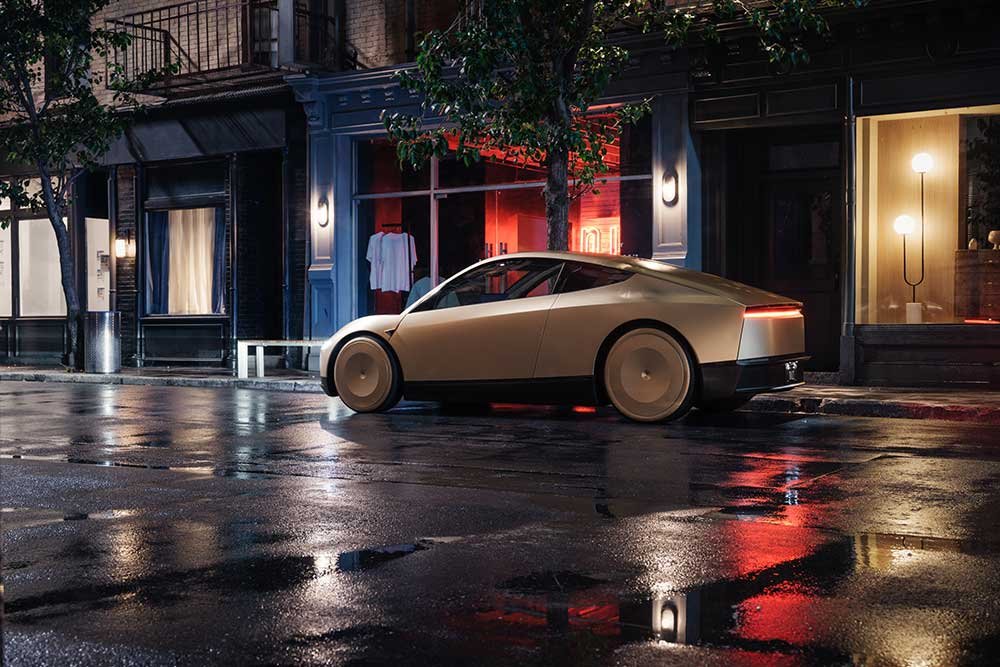

Tesla’s autonomous two-seater vehicle, called the Cybercab, will make its Asia-Pacific debut at a major trade show in Shanghai this November. The China International Import Expo, or CIIE, runs from November 5–10, 2025, at the National Exhibition and Convention Center. Tesla’s booth is located at A3-03 in Hall 2.1. The company’s return to China’s biggest import event marks a notable moment after it skipped last year’s expo.
Tesla’s Cybercab makes its Asia-Pacific debut at Shanghai’s CIIE trade show this November, marking the company’s return after skipping last year’s expo.
Tesla introduced the Cybercab in October 2024 as its dedicated autonomous vehicle. The company’s been testing it on public roads in Austin, Texas since June 2025. Safety monitors still ride along during these test drives. Tesla plans to start mass production in 2026 and intends to build approximately 2 million units annually. Tesla is committed to safety and reliability in the autonomous vehicles being developed for the robotaxi service.
This Shanghai display comes at a critical time for Tesla in China. The company’s delivered 432,704 vehicles across the country from January through September 2025. That represents just 4.9% of China’s total EV deliveries. Tesla’s market share has dropped considerably since 2020, when it held 16% of the Chinese EV market. By 2024, that number fell to 6.9%. The Cybercab showcase demonstrates Tesla’s strategy to regain market competitiveness through autonomous vehicle technology rather than traditional electric vehicles alone. Tesla experienced year-on-year delivery declines in seven of the first nine months of 2025, underscoring the urgency of the company’s strategic pivot. The Shanghai Gigafactory, Tesla’s largest global production hub, positions the company to leverage local manufacturing capabilities for future robotaxi production.
China’s robotaxi market is already crowded and competitive. Companies like Baidu and Pony AI have been running autonomous taxi services in multiple Chinese cities for years. Xpeng’s scheduled to hold an AI event on November 5—the same day as the CIIE—where it’ll likely show off its own robotaxi technology. Multiple robotaxi services already operate across China.
What makes Tesla’s approach different is its focus on using cameras and artificial intelligence for autonomous driving, rather than other sensor types. The Cybercab’ll be displayed alongside Tesla’s Optimus robot and Megapack batteries. The exhibit references “Master Plan Part IV,” suggesting Tesla’s long-term vision for autonomous vehicles.
However, Tesla hasn’t announced any confirmed plans to launch robotaxi services in China. The Shanghai debut appears designed to generate interest and showcase Tesla’s AI capabilities to Chinese consumers and investors. As China remains the world’s largest automotive market, Tesla’s Cybercab entry signals the company’s commitment to competing in the country’s growing autonomous vehicle sector.