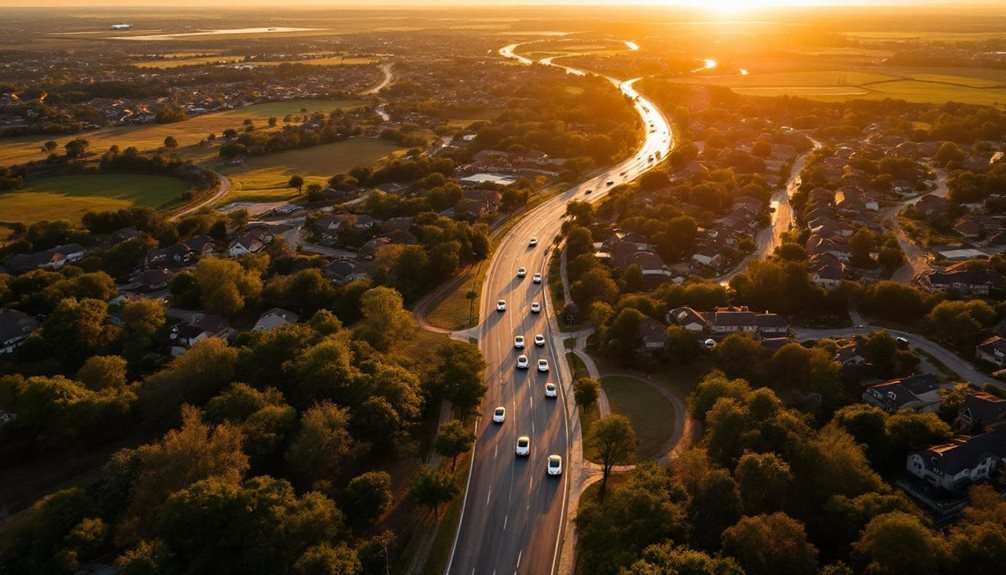

Tesla’s preparing to dramatically expand its robotaxi service area in Austin from 42 square miles to 450 square miles. This tenfold increase would bring autonomous rides to about 10% of Austin’s 4,500-square-mile metropolitan area. The company’s validation fleet is already testing in the wider perimeter, including rural roads and areas near Austin Bergstrom Airport.
The expansion follows a phased approach. Phase 1 covers the current 42 square miles, while Phase 2 targets the ambitious 450-square-mile goal. Tesla’s new service map caught attention online because it resembles an upside-down Tesla ‘T’ logo. Elon Musk tweeted about this shape, calling it a symbol of market penetration. Social media users compared the map to various humorous shapes, and Tesla’s official accounts responded with playful comments.
Competition in Austin’s robotaxi market is heating up. Waymo has expanded its own geofenced service area, creating direct rivalry with Tesla. Other companies like Lucid, Uber, and Nuro have formed partnerships to challenge Tesla’s position. Traditional ride-hailing companies are teaming up with autonomous technology providers to stay competitive.
Tesla’s robotaxis have completed 7,000 miles of operations in Austin since July 2025. The company’s validation testing includes complex scenarios on both rural and urban routes. Engineers are refining Full Self-Driving capabilities, particularly for the Cybertruck. Safety protocols and hardware performance undergo constant evaluation in real-world conditions.
The service offers flat-rate pricing, with rides costing $4.20 in Austin. Tesla doesn’t use variable pricing and enforces a strict no-tipping policy. The app instructs users not to leave gratuities. This policy extends to the Tesla Supercharger Diner, where the company says gratuities are already covered.
Tesla emphasizes zero-emissions transportation and integrated charging services. The expanded coverage area includes diverse terrain types, which could prove the technology’s scalability for other cities. If successful, this expansion might demonstrate robotaxi viability in densely populated urban areas and suburban zones.
The company’s unconventional communication style and ambitious expansion plans continue generating public debate about autonomous vehicle services’ future.