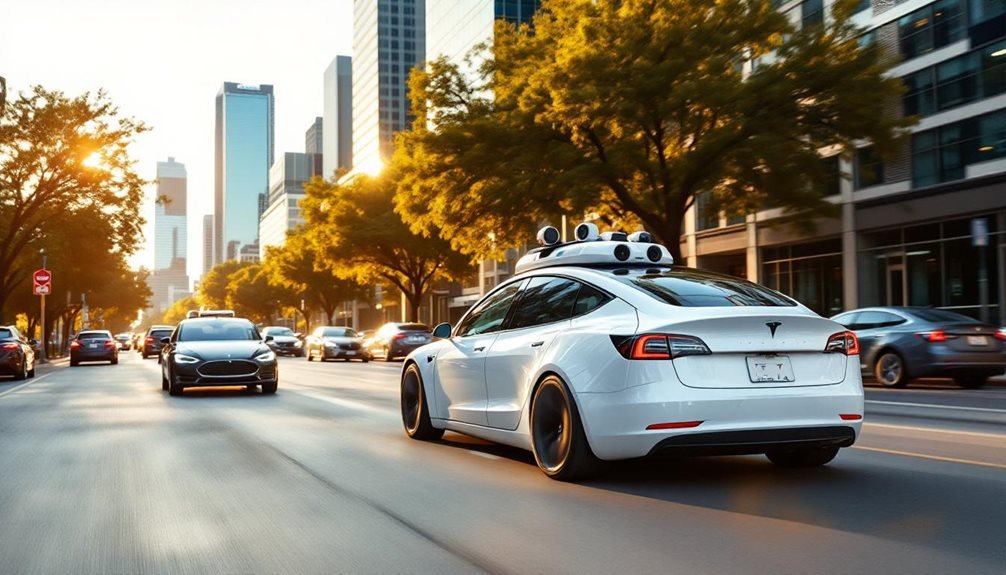
Tesla’s self-driving taxis are now cruising through Austin streets. The company received its transportation network company license from the Texas Department of Licensing and Regulation on August 8, 2025. This puts Tesla in the same category as Uber and Lyft in Texas.
The robotaxis actually started picking up passengers about a month before getting the official license. Tesla launched the service on a Sunday in late June 2025. At first, only about 10 cars were operating in select neighborhoods like Montopolis and Travis Heights. The company’s also been testing vehicles in Georgetown, about 30 miles north of Austin.
These aren’t completely independent yet. Every robotaxi ride includes a Tesla safety monitor sitting in the front passenger seat. Riders can’t sit in the driver’s seat. The service runs from 6 AM to midnight and only invited participants can use it right now. This includes social media influencers and Tesla supporters.
The vehicles avoid complex driving situations when they’re not confident. Tesla’s robotaxi software is reportedly six months ahead of what’s in regular Tesla cars. The system uses only cameras and machine learning, not radar or lidar. Company representatives say the technology has “additional breakthroughs” that make the cars drive in an “eerily human” way. Tesla vehicles achieve the lowest injury probability in standardized crash tests, providing additional safety assurance for the robotaxi service.
Texas passed new autonomous vehicle rules that take effect September 1, 2025. These laws require recording devices, emergency protocols, and coordination plans with first responders. Companies must prove their vehicles can handle system failures safely and follow traffic laws. The state’s regulatory flexibility has given Tesla a strategic advantage over more restrictive markets like California.
Some people worry about safety. Advocates pointed out the cars’ vision system identified school buses as regular trucks. Seven Austin-area Democratic lawmakers asked Tesla to wait until the new safety laws kicked in before launching. They wanted proof the company would follow all the rules.
Federal agencies are watching too. The National Highway Traffic Safety Administration asked Tesla for details about how the robotaxis work in low-visibility conditions. The Department of Transportation also requested information about the Austin operations. NHTSA’s request for information about the robotaxi service has been treated as confidential.
Tesla’s entry into the robotaxi market directly challenges Uber and Lyft’s autonomous vehicle efforts in Texas.