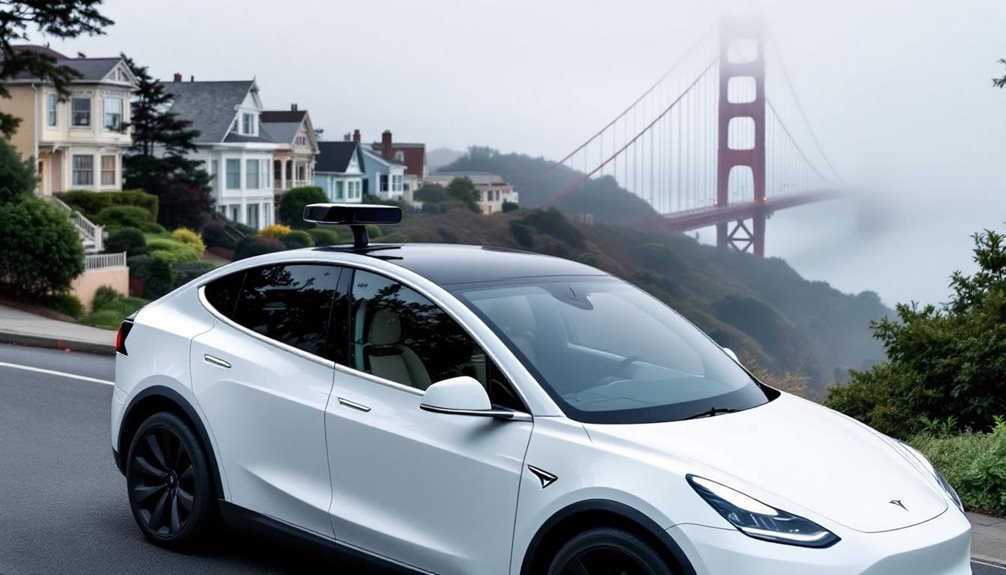
When will Tesla’s robotaxis hit Bay Area streets? The company plans to launch its invite-only robotaxi service the weekend of July 25-26, 2025. Select Tesla owners will get the first chance to try the paid ride service, though the company hasn’t announced how much trips will cost.
The service won’t be fully autonomous. Safety drivers will stay behind the wheel and can take control using the steering wheel or brakes if needed. Tesla hasn’t applied for permits to operate driverless vehicles in California, according to the state’s DMV. The company only has approval from the California Public Utilities Commission to transport employees, not the general public. Tesla faces a DMV lawsuit alleging the company provided misleading information about its vehicles’ autonomous capabilities.
Tesla’s Bay Area coverage will stretch about 80 miles from north to south, including Marin, San Francisco, the East Bay, San Jose, and parts of the South Bay. Cities like Sausalito, Berkeley, Los Gatos, and areas of Silicon Valley fall within the service zone. The service will operate in a geofenced area, meaning vehicles will only function within these predetermined boundaries.
Tesla’s Bay Area robotaxi zone spans 80 miles from Marin to San Jose
That’s much larger than Austin’s 13-mile radius, where Tesla launched its robotaxi service one month earlier. It’s also bigger than competitor Waymo’s coverage area, which includes San Francisco, Daly City, and Burlingame.
The robotaxis will use Tesla’s Full Self-Driving software, which CEO Elon Musk says now analyzes 10 times more parameters than before. Users will book rides through a special robotaxi app, similar to the one used in Austin. Musk told stakeholders he expects to expand beyond competitors’ service areas within weeks.
Tesla needs this service to succeed. The company’s automotive sales dropped 16% compared to last year, and overall revenue fell 12% to $22.5 billion in the second quarter of 2025. Musk sees robotaxis as essential for Tesla’s future growth.
Critics worry about safety risks and increased traffic from autonomous vehicles. Tesla reported no major safety problems during Austin’s first month of operation. The Austin service grew from a small area to cover the whole city in just a few weeks.
If the Bay Area launch goes well, Musk suggests Tesla will expand to other cities quickly. He called regulatory compliance the biggest challenge to growing the robotaxi business.