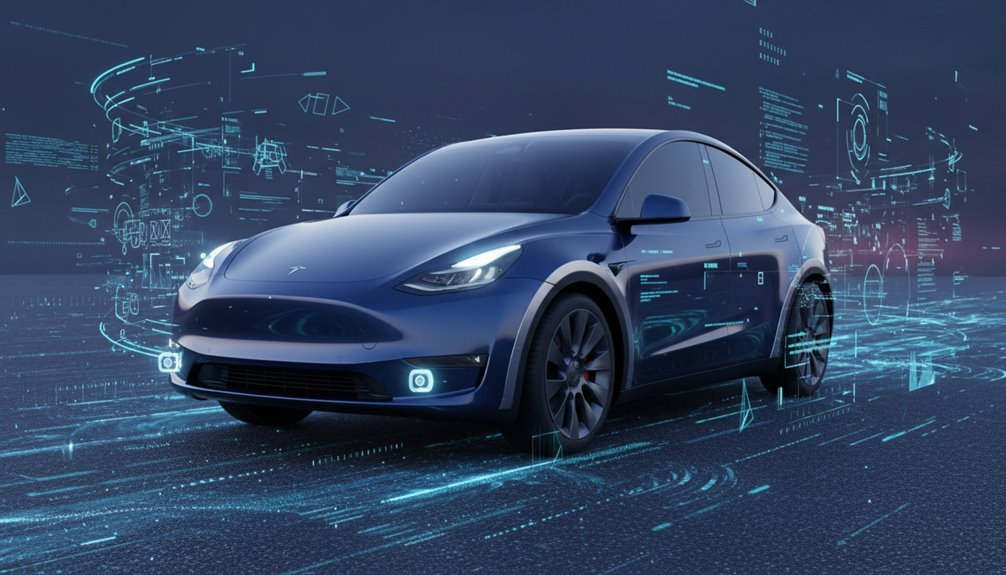
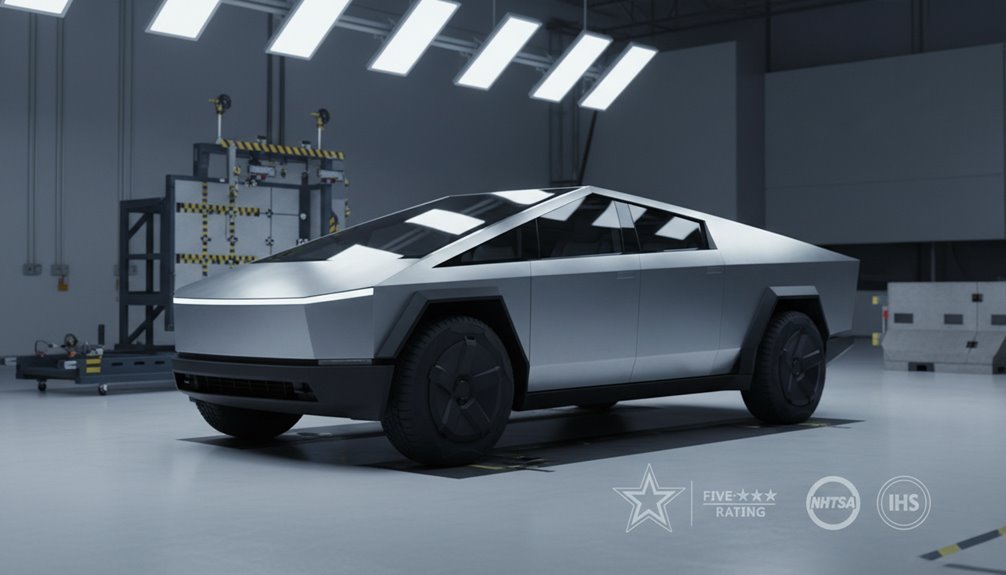
While car safety has always mattered, Tesla’s latest vehicles are taking crash protection to new levels. The company’s 2025 Model Y recently achieved a five-star Euro NCAP rating, demonstrating how advanced technology and real-world data are altering vehicle safety. Tesla’s approach combines multiple layers of protection, from detecting crashes before they happen to protecting occupants during impact.
Tesla’s collision avoidance systems work to stop accidents before they occur. Forward Collision Warning detects potential crashes early, while Automatic Emergency Braking activates without driver input when danger’s detected. The system can identify pedestrians and cyclists at speeds up to 100 mph. Lane monitoring prevents unintended lane departures by sending real-time alerts, and blind spot monitoring uses live camera feeds to eliminate visibility gaps that drivers can’t see.
Tesla’s collision avoidance systems detect crashes early and activate emergency braking automatically, identifying pedestrians at speeds up to 100 mph.
When collisions do happen, the vehicle’s structure absorbs the impact. Rigid frames minimize cabin deformation, while large crumple zones dissipate collision energy effectively. Reinforced battery shields protect against underbody damage. Advanced airbag systems activate based on collision severity and occupant positioning. Seatbelt pretensioners tighten faster before impact occurs, working alongside rear-seat airbags to maximize protection. The stronger aluminium casting provides improved structural rigidity during side impacts.
What makes Tesla’s approach unique is its reliance on real-world data. The company’s fleet of approximately 8.6 million vehicles continuously collects anonymous telemetry globally. This data identifies emerging safety risks and informs software updates delivered at no cost to owners. Engineers track collision frequency and airbag activation rates consistently, using this information to improve safety features. Autopilot’s advanced detection systems have achieved a 1.21% reduction in airbag deployment incidents compared to manual driving modes. Additional security features like Sentry Mode and intrusion sensors provide comprehensive vehicle protection beyond crash prevention.
Tesla’s next-generation Autopilot features four cameras with 360-degree view capability. These higher resolution cameras enable superior night vision performance and faster AI processing that responds quickly to pedestrians and obstructions. The Full Self-Driving supervised mode monitors driver attention through a cabin camera.
After crashes occur, post-crash systems activate automatically. Emergency calls alert services immediately, doors open for first responder access, and hazard lights warn surrounding traffic. High-voltage battery systems disconnect to reduce fire risk.
The 2025 Model Y scored 91 percent in adult occupant protection and 93 percent in child occupant protection during testing. These ratings reflect how Tesla’s combination of prevention, protection, and data-driven improvement is reshaping vehicle safety standards.