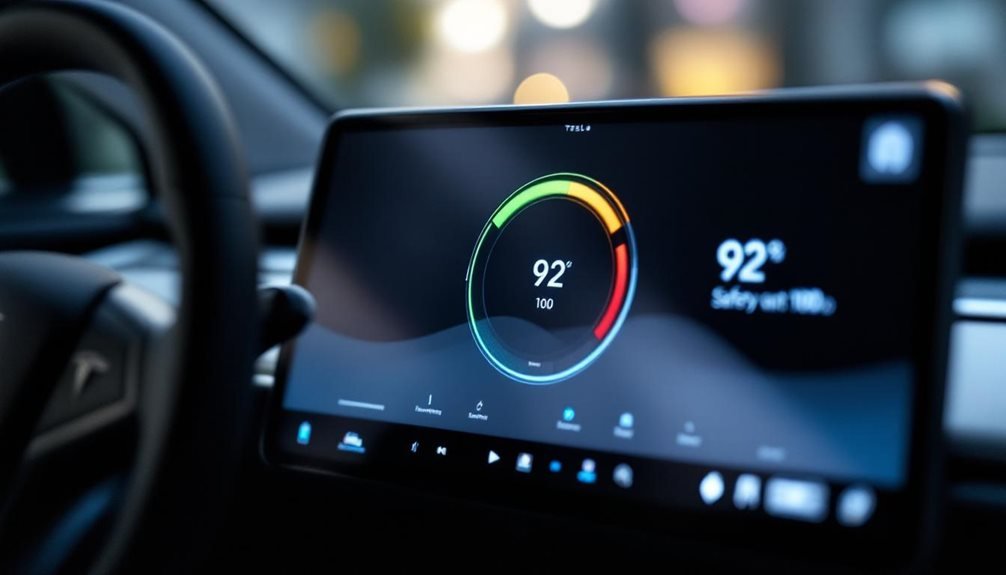
Tesla’s Safety Score rates drivers from 0 to 100 using real-time data from Autopilot sensors and telemetry. The system monitors hard braking, aggressive acceleration, speeding over 85 mph, following distances, and late-night driving between 11 PM and 4 AM. Higher scores mean safer driving and lower Tesla Insurance premiums. The formula converts crash risk predictions into digestible numbers that actually impact your wallet. Comprehending the eight factors behind this digital report card reveals exactly how Tesla judges your every move.
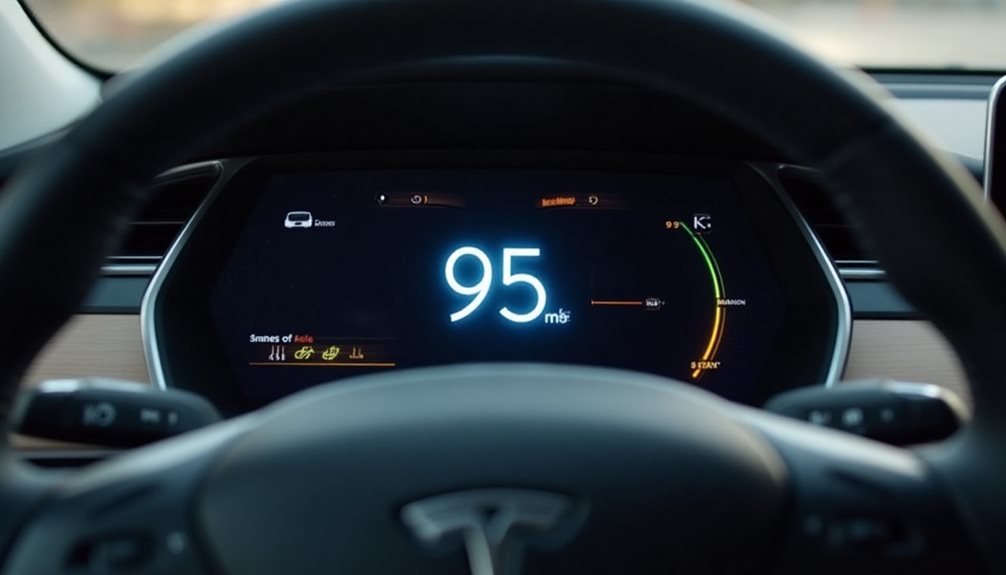
How does Tesla decide if someone drives like their grandmother or a caffeinated teenager behind the wheel? Meet Tesla’s Safety Score, a numerical rating system that ranges from 0 to 100 and watches every move drivers make. Higher scores mean safer driving. Lower scores? Well, let’s just say Tesla isn’t impressed.
The system uses real-time telemetry and Autopilot sensors to track driving behavior, then crunches that data through a Predicted Collision Frequency formula. This PCF estimates crashes per million miles using an impressive 30 billion miles of driving data. Tesla then converts these predictions into that clean 0-100 scale everyone can comprehend.
Tesla transforms 30 billion miles of driving data into a simple 0-100 score that predicts your crash risk per million miles.
What exactly is Tesla watching? The current version monitors several key metrics. Hard braking and aggressive acceleration patterns get flagged. Speed adherence matters, as does maintaining safe following distances. Drive without a seatbelt? That’ll hurt the score. Excessive speeding over 85 mph or relative to surrounding traffic gets penalized too. Late-night driving between 11 PM and 4 AM carries extra risk weight. The system also evaluates aggressive cornering to provide a more comprehensive assessment of driver behavior.
Tesla has tweaked this system considerably since launching in 2021. The original version focused on five core metrics including collision warnings and Autopilot disengagements.
Version 2.0 expanded to eight factors in 2024, adding excessive speeding and unbuckled driving penalties. The latest iteration, V2.2 from 2025, actually removed forward collision warnings from scoring entirely. Apparently, even Tesla realized some warnings aren’t entirely the driver’s fault.
The late-night driving window shifted from 10 PM-4 AM to 11 PM-4 AM in version 2.1. Tesla also increased thresholds for hard braking and aggressive turning, giving drivers slightly more leeway before getting dinged.
Why should drivers care? Because this score directly impacts Tesla Insurance premiums in participating regions. Lower scores mean higher perceived risk, which translates to higher costs.
Tesla provides detailed reports showing exactly where drivers can improve, turning insurance into a game with real financial stakes. The system offers real-time feedback during individual journeys to help drivers immediately recognize unsafe behaviors. Tesla’s commitment to safety is evidenced by their vehicles with Autopilot achieving approximately 10 times safer performance than the national average crash rate. In addition to promoting safe driving practices, Tesla also provides comprehensive support to its customers. This includes transparent tesla vehicle warranty coverage details, ensuring that drivers have peace of mind when they hit the road. Such initiatives reflect Tesla’s overarching goal of enhancing driver safety and satisfaction.
The system represents Tesla’s attempt at data-driven risk assessment. Statistical models adjust for real-world conditions like traffic density, and Tesla maintains transparency about how different factors impact scores. It’s quantified driving behavior with actual consequences.
Frequently Asked Questions
Can I Improve My Safety Score by Driving Someone Else’s Tesla?
Nope. Tesla’s Safety Score is tied to the vehicle, not the driver. So driving someone else’s Tesla won’t increase your own score at all.
Actually, it’s worse than useless – any aggressive braking, speeding, or tailgating will tank *their* score instead. The owner gets stuck with lower ratings, potentially higher insurance premiums, and reduced FSD Beta eligibility.
Their Tesla, their problem.
Does Using Autopilot Affect My Safety Score Ratings?
Using Autopilot definitely affects safety scores, but not always how drivers expect.
Forced disengagements from ignoring wheel checks hurt ratings.
Tailgating penalties can still hit even when Autopilot maintains what seems like safe distances.
Hard braking after taking control counts against drivers too.
But smooth, uninterrupted Autopilot stretches actually help scores.
The system’s default following distances matter more than human judgment, apparently.
How Often Does Tesla Update My Safety Score?
Tesla updates safety scores continuously while you drive, tracking every hard brake and aggressive turn in real-time. The scoring system processes data immediately after each trip.
However, Tesla tweaks the actual scoring algorithms frequently—sometimes monthly. Major system overhauls happen annually, like Version 2.0 launching in March 2024.
Minor adjustments, like changing late-night driving windows, happen whenever Tesla feels like it.
Will My Safety Score Reset if I Sell My Tesla?
No, the safety score won’t reset when someone sells their Tesla. The score stays glued to the vehicle’s VIN, not the driver.
New owners inherit whatever driving history the previous owner racked up. That means buying a Tesla with a terrible safety score could mean higher insurance premiums from day one. Additionally, new owners should be mindful of how that driving history can impact their overall ownership experience. When exploring options, it’s beneficial to research the previous owner’s habits and consider any factors that could affect future insurance costs. For those seeking to mitigate these risks, following buying a Tesla tips can help ensure a smoother transition into ownership.
Tesla tracks everything through the car’s sensors, so there’s no escaping past mistakes.
Can Weather Conditions Negatively Impact My Safety Score?
Weather absolutely hammers Tesla safety scores. Rain, snow, and ice force drivers into behaviors the algorithm punishes—hard braking on slippery roads, aggressive turning to avoid hazards, reduced following distances due to poor visibility.
The system doesn’t care about black ice or blinding snow. Tesla’s 2025 updates increased some tolerance thresholds, but drivers still get dinged for weather-related driving adjustments.