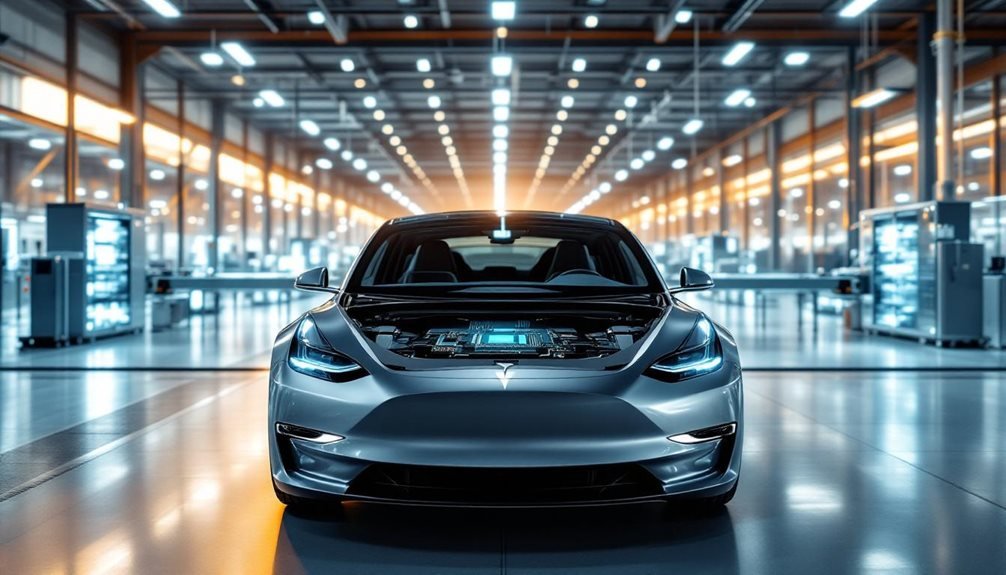
Tesla struck a massive $16.5 billion deal with Samsung to make computer chips for its self-driving cars. The eight-year agreement starts in July 2025 and runs through December 2033. Samsung will produce AI6 and A16 semiconductors that Tesla needs for its Full Self-Driving technology.
Tesla secures $16.5 billion semiconductor deal with Samsung for self-driving chip production through 2033.
Samsung’s new factory in Taylor, Texas, will handle the production. The facility sits close to Tesla’s Gigafactory in Austin, making it easier for the companies to collaborate. Manufacturing begins on July 24, 2025. Samsung will use its advanced 4-nanometer and 5-nanometer technology to build these chips. The contract involves production of advanced 2nm chips, positioning Samsung at the forefront of semiconductor technology.
This deal marks a major win for Samsung’s struggling semiconductor division. The company has been losing ground to Taiwan’s TSMC, which dominates the chip-making industry. Now Samsung has secured billions in guaranteed revenue from one of the world’s most significant companies.
Tesla’s getting a big advantage too. The company won’t depend solely on TSMC anymore for its critical chips. Having two suppliers protects Tesla if one faces production problems or political tensions interfere with supply chains. The bulk manufacturing agreement should also help Tesla save money on each chip.
The timing works perfectly for Tesla’s plans. The new chips will arrive as the company rolls out more advanced self-driving features. These processors will handle complex tasks like computer vision and neural networks that power autonomous vehicles.
Samsung’s Taylor facility was struggling to find major customers before this deal. Now it has a clear purpose and massive order to fill. The partnership will create engineering and manufacturing jobs in Texas as production ramps up.
The deal affects the entire automotive industry. More available chips mean car companies can add advanced features faster. Other automakers might follow Tesla’s lead and develop their own self-driving technology. Chip manufacturers are already investing more money in advanced production capabilities.
This partnership shows how critical semiconductors have become for electric vehicles. The agreement aligns with the Biden administration’s push for domestic chip production, which included $4.75 billion in Chips Act funding for Samsung’s Texas operations. As cars evolve into computers on wheels, the companies that control chip production gain enormous power. Tesla’s move guarantees it won’t get left behind in the race for automotive innovation.