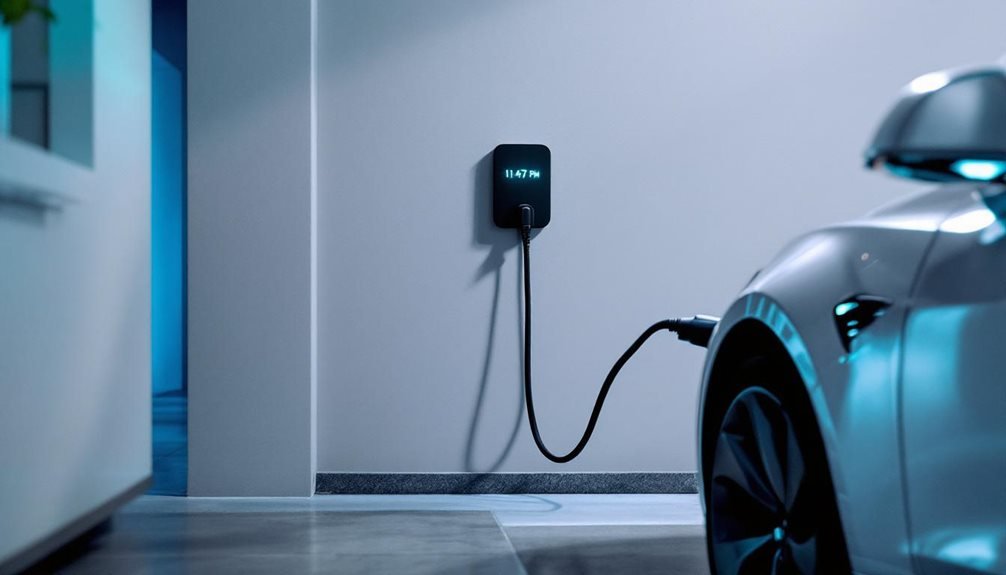

Tesla owners can schedule charging through the mobile app (App > Schedule > Charging Tab) or in-car controls (Controls > Charging > Schedule) to hit those sweet off-peak hours. Most utilities offer cheaper rates from midnight to 6 AM, while peak costs slam wallets between 2-7 PM. The 2024 update added start and stop times for better control. Here’s the catch: utility tariffs vary wildly by region, so assumptions about peak hours could backfire spectacularly and jack up costs instead of savings. Additionally, it’s worth considering the long-term benefits of investing in a Tesla Wall Charger, which can provide more convenient charging options at home. However, potential buyers should also factor in the tesla wall charger installation expenses, as these can vary depending on the complexity of the setup and local regulations. By carefully evaluating both charging schedules and installation costs, owners can maximize their savings and efficiency.

While Tesla owners obsess over range anxiety, many completely ignore the wallet-draining reality of peak-hour electricity rates. Smart scheduling can slash charging costs, but Tesla’s approach isn’t exactly intuitive.
The Tesla app offers the most straightforward scheduling method. Users steer to App > Schedule > Charging Tab and set a start time. Set it for 7:00 PM if off-peak rates kick in then. The car sits there, plugged in but waiting like an obedient dog until the scheduled time arrives. Manual override remains possible through the app during non-scheduled hours, assuming mobile connection cooperates.
In-car settings provide more control through Controls > Charging > Schedule. Tesla’s 2024 update finally added both start and stop times instead of the previous single-parameter confusion that frustrated users. The system can precondition the cabin using charger power based on departure time. It even allows different charging days for weekday versus weekend schedules.
Location-based syncing with Home Wall Connectors adds another layer of automation. The wall box includes a random start option that helps balance grid demand by introducing slight variations in charging initiation times.
Understanding peak hours requires homework. Utility providers vary wildly. Common off-peak windows often span midnight to 6:00 AM, while peak rates typically hammer customers from 2:00 PM to 7:00 PM in many regions. Check the electricity bill or utility tariff because assumptions cost money.
Third-party solutions like Charge HQ override Tesla’s built-in scheduling for solar optimization. These systems define six-hour charging windows starting from a specified time. Manual charging through Tesla’s app pauses third-party control, creating potential conflicts. Location dependency means scheduling only activates at home, with detectable delays when plugging in elsewhere. Additionally, users need to be aware that while third-party systems can enhance charging efficiency, they may not always align perfectly with a tesla destination charging overview. This can lead to unexpected charging times and reduced overall effectiveness if not carefully monitored. Therefore, understanding both third-party solutions and Tesla’s native features is essential for optimal solar utilization.
Energy management strategies focus on charging during cheapest hours, typically overnight. Solar panel integration allows storing daytime excess energy. Battery preconditioning before departures improves efficiency. Monitoring usage patterns prevents unnecessary charging cycles. The schedule prevents unnecessary early charging when energy costs remain elevated during peak periods. Tesla’s advanced vehicle cameras and sensors continuously monitor the surrounding environment even while parked and charging.
User challenges persist despite improvements. Confusion over start versus stop time prioritization remains common. Solar optimization conflicts with Tesla’s scheduling logic create headaches. Time zone adjustments become necessary during travel.
Tesla’s recent updates simplified setup, but testing schedules with minimal battery confirms timing works correctly. Monthly utility bill reviews help refine schedules over time. The wallet benefits are real for those who bother learning the system.
Frequently Asked Questions
Will Scheduling Charging Affect My Tesla’s Battery Warranty or Lifespan?
Scheduling Tesla charging won’t void the battery warranty or kill the lifespan. Tesla’s warranty focuses on capacity retention, not charging habits. Additionally, regular charging practices can help maintain battery health, as long as drivers remain within Tesla’s recommended guidelines. In the case that issues do arise, troubleshooting Tesla charging issues can provide clarity on any potential problems, ensuring a smooth experience. Understanding the nuances of charging can enhance the overall efficiency and longevity of the battery.
The company’s thermal management systems handle the heavy lifting during charging cycles anyway. Off-peak scheduling is about saving money on electricity bills, not destroying batteries.
Tesla models typically lose around 12% capacity after 200,000 miles under normal use, regardless of scheduling preferences.
Can I Override Scheduled Charging if I Need to Leave Early?
Tesla doesn’t make overriding scheduled charging particularly user-friendly, unfortunately. The system prioritizes departure-time logic over manual “Charge Now” commands.
If someone needs to leave early, they can delete the existing schedule in the app and recreate it with an adjusted departure time.
Alternatively, unplugging and plugging back in resets the charging system.
The car basically refuses immediate charging requests when schedules are active.
What Happens if My Power Goes Out During Scheduled Charging?
When the power goes out during scheduled charging, the Powerwall takes control. It automatically slows down vehicle charging based on home energy demands.
Charging stops completely when the Powerwall hits the user-set backup threshold. Here’s the kicker—charging won’t resume automatically after being paused. Users need to manually adjust thresholds, wait for the outage to end, or rely on solar recharge during daylight hours.
Do Off-Peak Rates Apply to Tesla Supercharger Stations?
Most Supercharger stations don’t use traditional off-peak rates. Tesla’s rolling out adaptable pricing at select locations instead—rates change based on real-time station occupancy, not time of day.
Only ten pilot stations currently have this system, including Davis, California.
Your charging cost locks in when you start the session, so no surprise price jumps mid-charge.
It’s utilization-based pricing, not the typical peak/off-peak schedule most people expect.
How Much Money Can I Actually Save With Off-Peak Charging?
Off-peak charging can slash electricity costs by 15-30% compared to peak rates.
National Grid’s program throws in $0.05 per kWh rebates during summer off-peak hours, averaging $100 yearly.
Tesla owners save roughly $0.04-$0.13 per mile versus gas guzzlers.
High-mileage drivers see the biggest impact.
The built-in Tesla metrics actually calculate fuel savings automatically, comparing charging costs to what similar gas vehicles would cost.