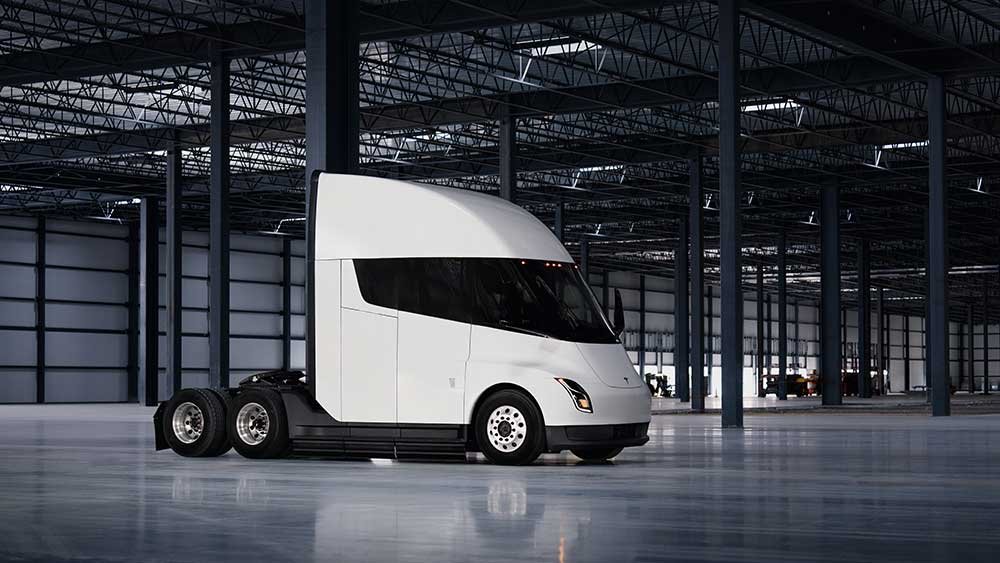

Tesla’s upcoming 2026 Semi redesign introduces a sleeker, more efficient electric truck built for the future of commercial hauling. The truck features a completely updated exterior that borrows design elements from Tesla’s Model Y and Cybertruck. The new front light bar integrates headlights into a horizontal design rather than keeping them separate. A smaller windshield and redesigned front bumper with potential cooling channels complete the modernized appearance.
Tesla’s 2026 Semi redesign features a sleeker exterior drawing design inspiration from the Model Y and Cybertruck, complete with integrated light bars and modernized front styling.
The redesigned Semi prioritizes aerodynamics to cut down fuel consumption. Engineers smoothed out the roofline with rounded contours and added prominent character lines along the side profile. They’ve reduced drag-causing vortex points around the A-pillars, resulting in a lower overall drag coefficient. These changes directly improve how efficiently the truck moves through the air.
Efficiency represents the Semi’s most impressive achievement. The truck consumes approximately 1.7 kilowatt-hours per mile, which exceeds expectations for a vehicle this size. Real-world testing shows efficiency ranging from 1.55 to 1.73 kWh per mile. This efficiency translates to better battery usage and longer trips between charging stops. Mass production is slated for 2026, marking Tesla’s transition from pilot programs to commercial-scale manufacturing. The updated Semi achieves energy consumption as low as 1.06 kWh/km, demonstrating significant efficiency improvements over previous generations.
The 2026 Semi can travel up to 500 miles on a single charge while carrying a full 82,000-pound load. That’s roughly equivalent to 800 kilometers under ideal conditions. The truck can accelerate from zero to sixty miles per hour in approximately twenty seconds while fully loaded. It also maintains highway speeds while climbing steep five-percent grade inclines.
Charging technology supports the truck’s commercial demands. The Semi features 1.2 megawatt ultra-fast charging capability, which works with Tesla’s Supercharging network. This charging speed markedly exceeds current technology, allowing trucks to spend less time at charging stations. The battery’s typical capacity is designed to endure around 1,500 charge cycles before requiring replacement, ensuring long-term commercial viability.
Weight improvements have been pivotal to the redesign. The long-range version weighs 23,000 pounds, representing careful engineering that balances durability with efficiency. Structural improvements and component weight savings enable increased payload capacity without exceeding the 82,000-pound gross combined weight limit.
Looking forward, Tesla’s designed the Semi specifically for autonomous trucking operations. Future integration with Tesla’s Full-Self-Driving technology could enable zero-emission, self-driving long-distance hauling. New camera systems positioned above the front wheel arches support bolstered safety and autonomous capabilities. These upgrades position the Semi as a revolutionary vehicle for the trucking industry’s electric future.