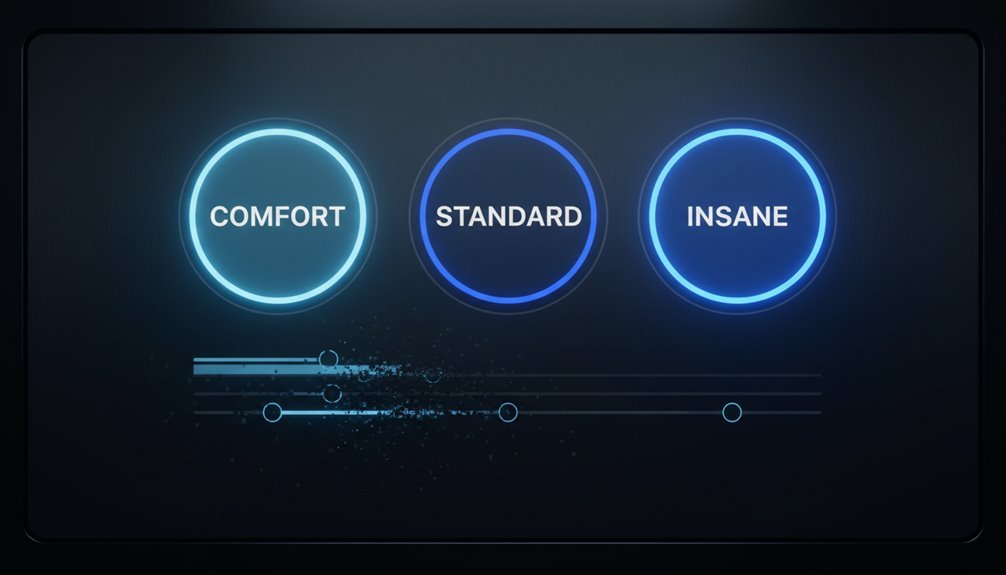

Tesla’s 2026 Model S and Model X are getting considerable changes to how drivers control suspension settings. The company’s redesigned interface replaces the detailed Suspension tab with a simpler Dynamics tab. This shift marks a major move away from granular control toward preset-based driving modes.
The old suspension interface featured multiple sliders and adjustments. Drivers could fine-tune ride comfort and handling separately. The system offered four ride height options: Low, Standard, High, and Very High. Owners could manually control these settings with precision. The display also showed detailed performance data about suspension operation.
Tesla’s new system remarkably simplifies these controls. The Dynamics tab now offers three main drive mode presets: Comfort, Standard, and Insane or Plaid. Each preset automatically adjusts multiple suspension settings at once rather than allowing individual parameter changes. The company eliminated Sport mode as a standalone option. Custom mode still exists but with considerably reduced functionality compared to before.
Ride height control has moved to the Controls tab. Instead of four options, drivers now get only two choices: Lower and Higher preferences. The auto-lowering feature remains functional at 35 mph for the High setting. The system can still save frequently visited locations and automatically raise suspension when returning to those spots. The updated software now maintains lifted ride height until manually changed rather than reverting automatically.
Tesla justifies these changes by claiming its flexible suspension system has matured greatly. The company argues that three presets cover most driving scenarios effectively. According to Tesla, the suspension better interprets road conditions and driving inputs automatically. The company views the removal of manual adjustments as luxury, not limitation. For drivers seeking enhanced suspension performance and longevity, aftermarket suspension upgrades with spherical bushings offer an alternative approach to improving handling and eliminating bushing deflection.
Physical suspension improvements accompany the interface changes. New bushings and redesigned components provide a smoother ride and reduce cabin noise. The vehicle weighs 186 pounds more, partly from these suspension modifications. The upgrades support longer driving range despite the added weight.
Enthusiasts aren’t happy about these changes. Long-time owners miss the detailed adjustment capabilities and data displays. Track Mode V3 retains some advanced functionality for performance driving, but it doesn’t compensate for the widespread control reduction.
For many dedicated drivers, the 2026 redesign feels like losing tools rather than gaining simplicity.