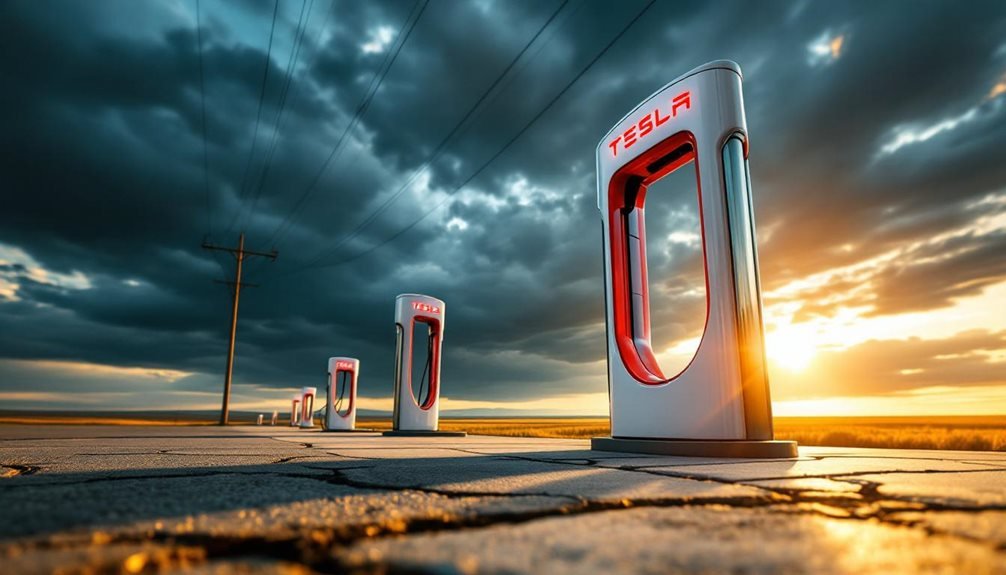

Electric vehicle drivers in Grande Prairie now have access to Tesla’s high-speed charging technology. The company’s Supercharger station stands out among the city’s 25 public charging ports within a 15-kilometer radius. While most stations offer slower Level 2 charging, Tesla’s facility provides much faster charging speeds.
The station remains exclusive to Tesla vehicles. Other electric car owners can’t use it, even with adapters. This differs from public stations run by Flo and ChargePoint, which welcome all electric vehicles. Tesla plans to add four more charging stalls in 2025 as part of its expansion across Canada.
Grande Prairie’s charging environment shows clear divisions. Twenty-two stations provide Level 2 charging, while only three offer fast Level 3 charging. Six stations don’t charge fees. Tesla’s Supercharger adds to the fast-charging options but limits who can use them. The city’s commitment to sustainable transportation aligns with its growing electric vehicle infrastructure and environmental goals.
The expansion connects Grande Prairie to Tesla’s growing network in Alberta. Similar stations already operate in Calgary and Fort McMurray. Fast charging attracts long-distance travelers who need quick stops. Tesla Superchargers use liquid-cooled cables to prevent overheating and support extreme weather conditions. Most Tesla owners can charge their vehicles in under 30 minutes at these stations.
Local reactions remain mixed. Some praise the faster charging speeds. Others criticize the closed network that excludes non-Tesla drivers. The debate highlights broader questions about charging standards in Alberta. Should all stations work with every electric vehicle? Can companies build exclusive networks?
Tesla’s approach differs from competitors. While Flo and ChargePoint build open networks, Tesla focuses on its own customers first. This strategy helps Tesla sell more cars by offering exclusive benefits. It also creates challenges for drivers of other electric vehicle brands.
The province watches these developments closely. Alberta wants more electric vehicles on its roads. Officials may need to decide whether exclusive charging networks help or hurt this goal. Some suggest new rules requiring open access to all charging stations. Meanwhile, local dealerships like Grande Prairie Volkswagen, Hyundai, and Subaru offer their own charging stations within 1.19 km of each other, providing alternatives for non-Tesla electric vehicle owners.
Tesla’s dual role as car maker and charging provider gives it unique advantages. The company controls both the vehicles and the infrastructure. This integration appeals to buyers who want seamless charging experiences. The Grande Prairie Supercharger represents Tesla’s growing influence in northern Alberta’s electric vehicle market.