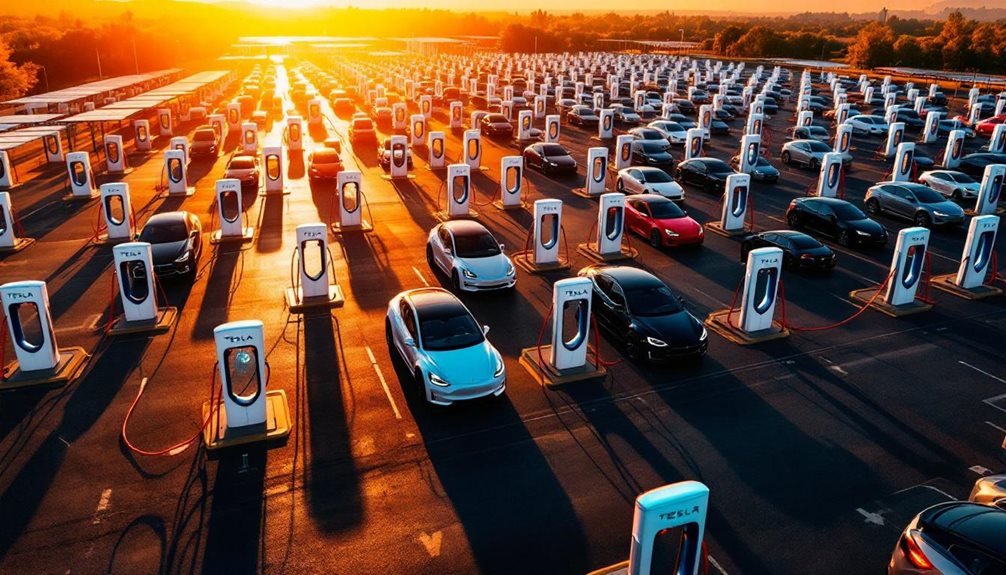

How did Tesla bounce back from a sluggish start to achieve record-breaking Supercharger growth? The company’s charging network hit new milestones in the second quarter of 2025, distributing 1.6 terawatt-hours of energy through 45 million charging sessions.
Tesla’s Q2 performance marks a sharp turnaround from earlier struggles. The company added over 500 new Supercharger stations during the quarter, pushing its global total past 50,000 chargers. That’s a massive jump from Q1, when Tesla built only 156 stations—a 47.5% drop from the previous year.
Tesla added over 500 Supercharger stations in Q2, rebounding from Q1’s sluggish 156 stations
The surge in charging activity reflects growing electric vehicle adoption. Tesla’s customers used 26% more energy compared to last year, while the number of charging sessions also climbed 26%. Each session averaged more than 33 kilowatt-hours, showing drivers are using the network for longer trips. The latest data shows sessions averaging 35.5 kWh, indicating even longer charging stops as drivers take more extended journeys.
Tesla’s also rolling out its new V4 Supercharger technology at key locations. These upgraded chargers deliver power faster than older versions, cutting down wait times for drivers. The company’s working to upgrade its older V2 stations while keeping the entire network running smoothly.
The expansion strategy includes building bigger stations. New locations average 11.7 charging stalls, up from 9.4 stalls at older sites. This helps reduce congestion at popular charging spots.
Vehicle deliveries drove much of the charging growth. Tesla delivered over 450,000 cars globally in Q2, up 15% from last year. The refreshed Model 3 and Model Y attracted strong buyer interest. The company’s new Gigafactory in Mexico officially opened during the quarter, positioning Tesla to boost North American production capacity for future models. For drivers needing portable charging solutions, Tesla’s Mobile Connector provides flexible charging from standard household outlets when Superchargers aren’t available. In addition to the growth in North America, Tesla is setting its sights on new markets, with Tesla’s plans for Japan expansion highlighting the company’s commitment to global reach. This initiative aims to establish a stronger presence in Asian markets, catering to the increasing demand for electric vehicles. As part of this strategy, Tesla will enhance its charging infrastructure to support both new and existing customers in the region.
The environmental impact is significant. In Q1 alone, Tesla’s network delivered 1.4 terawatt-hours of energy, equivalent to saving 173 million gallons of gasoline and preventing 1.5 billion kilograms of carbon dioxide emissions. Q2’s higher energy delivery suggests even greater environmental benefits.
Daily usage remains strong across the network. Each charging stall averaged 227 kilowatt-hours of daily throughput in Q1, showing consistent demand. Tesla’s rapid Q2 expansion positions the company to handle growing charging needs as more drivers switch to electric vehicles.