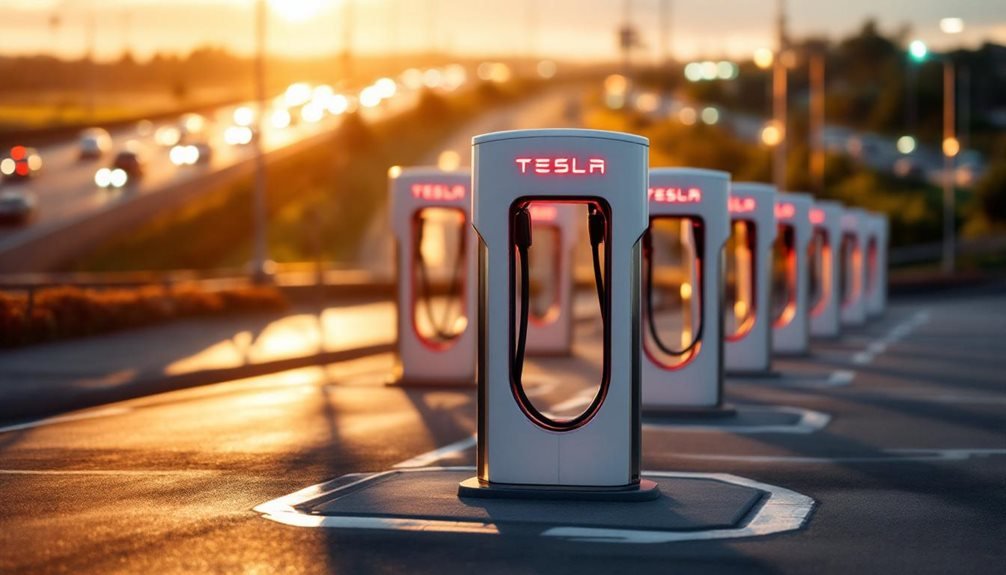
Tesla’s Supercharger network scored 709 points for reliability in J.D. Power’s 2025 U.S. Electric Vehicle Experience Public Charging Study, beating the industry average by 55 points. The study, released August 13, 2025, measures customer satisfaction on a 1000-point scale for both DC fast charging and Level 2 public networks.
This marks Tesla’s fifth straight year at the top of the DC fast charging segment. The company maintained its lead even as overall satisfaction dropped across the industry. Tesla’s score fell 22 points from last year, while the industry average for DC fast charging declined 10 points to 654. Tesla Superchargers achieved a 4% failure rate during charging visits, significantly outperforming competitors.
The study found that non-charging visits dropped to 14% industry-wide, a four-year low. This represents a five-point improvement from 2024’s 19% rate. Tesla’s network showed the lowest non-charging visit rates among all networks studied. These reliability gains happened despite concerns about National Electric Vehicle Infrastructure funding.
Cost emerged as the biggest problem for charging networks. Customer satisfaction with pricing dropped 16 points compared to last year. It’s now the lowest-rated factor across all networks. Non-Tesla drivers face higher prices when using Superchargers, creating a value perception gap between different vehicle brands.
Tesla’s Destination Level 2 network also performed well, scoring 661 points. That’s 54 points above the Level 2 segment average of 607. The Supercharger network leads both charging segments in the study. Independent third-party DC fast chargers averaged 591 points, highlighting the performance gap between proprietary and non-branded networks.
The research shows a mixed scenario for the charging industry. While physical infrastructure works better than before, customers aren’t happy about rising costs. Payment structure inconsistencies across networks add to customer frustration. The difference in access and pricing between Tesla and non-Tesla vehicles affects how users view the value they’re getting.
Despite the overall satisfaction decline, Tesla’s reliability advantage remains strong. The company’s consistent performance over five years shows its network’s technical strength. However, the growing cost concerns suggest that reliability alone won’t be enough to maintain customer satisfaction.
As more non-Tesla vehicles gain access to Superchargers, pricing differences will likely become a bigger issue for the network’s overall satisfaction scores.