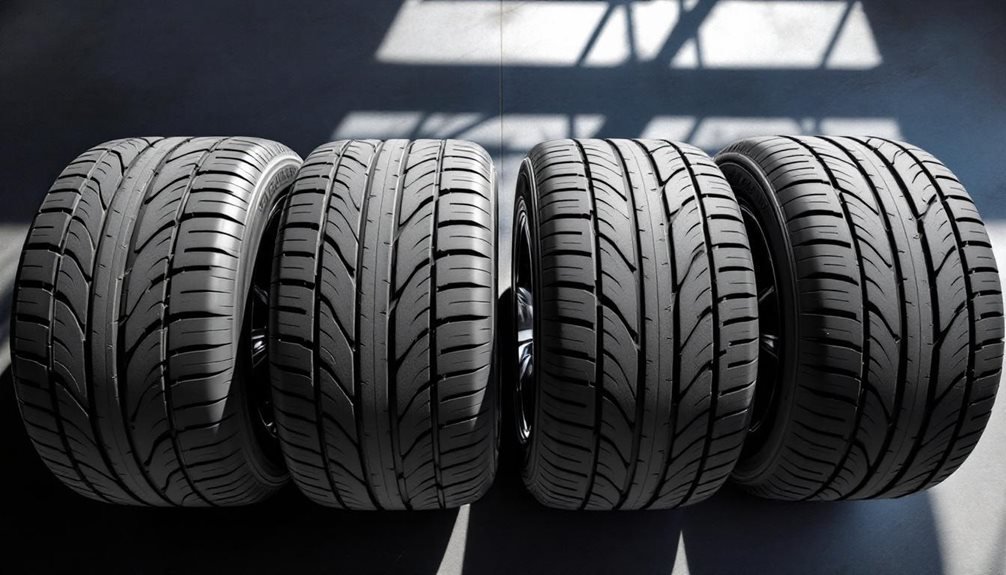
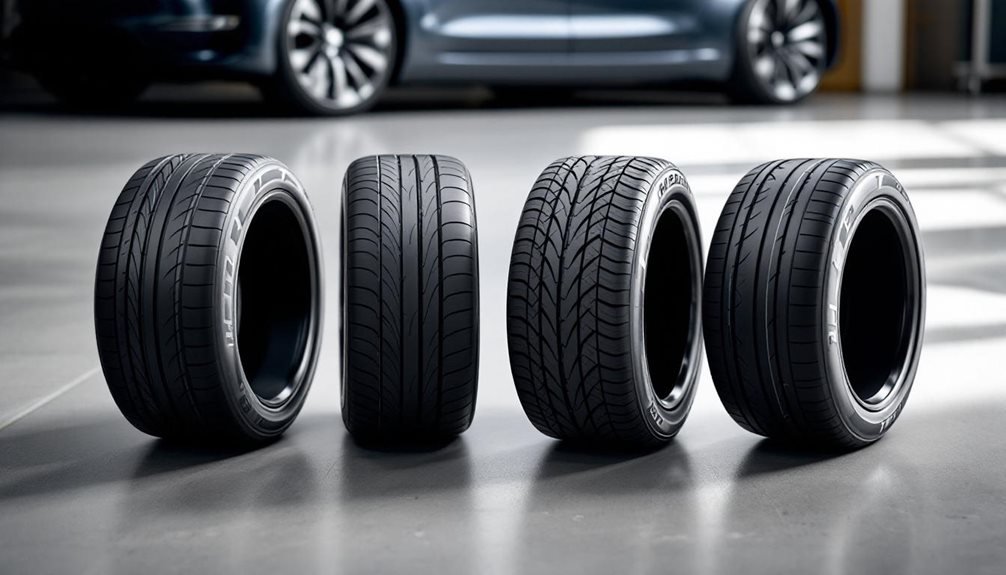
Tesla owners should rotate their tires every 6,000 to 12,000 miles, though Tesla’s own manuals can’t seem to agree on the exact number. The process is straightforward—front tires move straight back, rear tires move straight forward. Regular rotation extends tire life by 25 to 50 percent and maintains the traction these heavy electric vehicles desperately need. Tesla service centers typically handle this during annual visits, but the finer details reveal some interesting considerations.
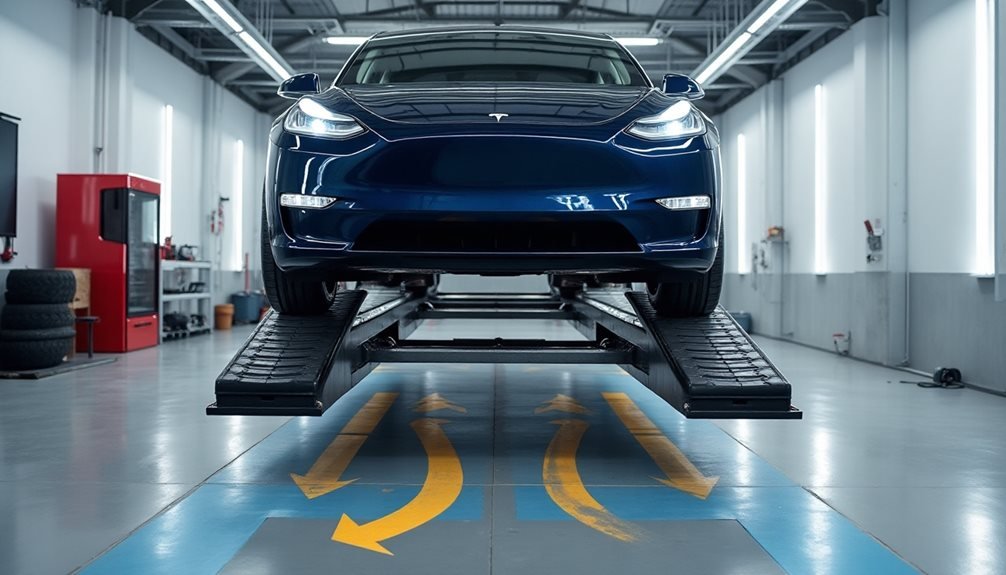
How often should Tesla owners rotate their tires? Tesla’s official recommendations are about as consistent as their delivery dates. The Model 3 manual suggests every 6,250 miles, while Model Y owners get a range of 6,000 to 7,500 miles. Then there’s the annual service guideline of 10,000 to 12,000 miles. Mixed signals, much?
Tesla’s tire rotation recommendations vary wildly, ranging from 6,000 to 12,000 miles depending on which manual you’re reading.
The rotation pattern itself is straightforward. Front tires move to the back on the same side, rear tires move to the front. No fancy X-patterns here. Tesla service centers actually put the best tires on the rear axles, which makes sense for maintaining grip and stability. This isn’t rocket science, though Tesla would probably overcomplicate it if they could.
Regular rotation delivers real benefits. Tire lifespan can extend by 25 to 50 percent when done properly. That’s significant money saved, especially considering how much Tesla owners already spend. Even wear across all four tires maintains the handling characteristics these electric vehicles are known for. Safety improves too, since consistent traction matters more in an EV that can accelerate like a caffeinated cheetah.
Monitoring tire wear requires actual effort. Visual inspections work, but tread depth gauges provide better data. Tesla’s touchscreen can track service dates, though owners still need to physically check their tires. Irregular wear patterns often signal alignment issues or aggressive driving habits. Additionally, excessive road noise while driving can indicate uneven tire wear that requires immediate attention.
Tesla’s annual service includes rotations at 12,000-mile intervals. DIY rotations are possible with proper tools, though professional services typically include wheel balancing. Costs align with standard tire rotation pricing, nothing shocking there. Many Tesla owners find that local tire dealers offer significantly cheaper rotation services compared to Tesla’s service centers.
Special circumstances complicate matters. Staggered wheel setups require different approaches, though they’re rare on Model Y vehicles. Performance models with sticky tires need more frequent attention. Tires with more than 2/32 inches of tread difference should be replaced, not rotated. When replacement becomes necessary, Tesla owners can now order official OEM parts through the Electronic Parts Catalog for authentic components.
The smart approach aligns rotations with annual service visits. Pairing rotations with wheel balancing maximizes tire longevity. Combining these services with brake and suspension checks creates efficient maintenance schedules. Tesla’s service app can track rotation history digitally, because apparently everything needs an app now.
Frequently Asked Questions
Can I Rotate Tesla Tires Myself or Do I Need Professional Service?
Tesla owners can absolutely rotate their own tires if they’re handy with tools. The process involves removing all four wheels, swapping front to back on the same side, and resetting the system via touchscreen.
However, professional service offers perks like alignment checks, balancing, and inspections for uneven wear. DIY saves money, but pros catch problems early.
Do Tesla’s All-Wheel Drive Models Require Different Tire Rotation Patterns?
Tesla’s AWD models don’t get official rotation patterns from the company. Go figure. The manual basically shrugs and leaves owners guessing.
Community recommendations include the rearward cross pattern—front tires go straight back, rear tires cross to opposite fronts.
Some prefer the X-pattern, swapping diagonally. Both work for balanced wear distribution.
Directional tires complicate things, limiting rotation options to same-side movements only.
Will Tire Rotation Affect My Tesla’s Warranty Coverage?
Tesla’s standard warranty doesn’t require tire rotations to maintain coverage. Skipping rotations won’t void the warranty outright, but here’s the catch – uneven tire wear from negligence isn’t covered under warranty claims.
How Much Does Tesla Tire Rotation Cost at Service Centers?
Tesla service centers charge premium rates for tire rotations compared to independent shops. Cybertruck owners face the steepest hit at $295 per rotation, while traditional models cost less but still exceed market rates. Many Tesla owners are left wondering about the value they receive for these higher costs, especially when independent shops can offer similar services at a fraction of the price. To provide clarity, a comprehensive tesla tire pricing overview reveals the significant disparities in cost and highlights which models incur the highest expenses. As the brand continues to expand its lineup, understanding these pricing structures will be crucial for current and prospective owners alike.
Independent shops typically charge $20-$50, but many refuse newer Tesla models. The company’s specialized equipment and higher labor rates drive up costs.
Pricing transparency remains inconsistent across Tesla’s service network.
Can Different Tire Brands Be Rotated on the Same Tesla Vehicle?
Tesla officially says no to mixing tire brands. Their guidelines demand identical tires across all four wheels. Different brands mean different tread patterns, sidewall stiffness, and rubber compounds.
This creates uneven wear and handling issues. Some Tesla service centers won’t honor warranties on mixed-brand setups. Insurance companies might also balk.
Sure, it’s tempting to save money by mixing brands, but Tesla’s pretty clear about this one.