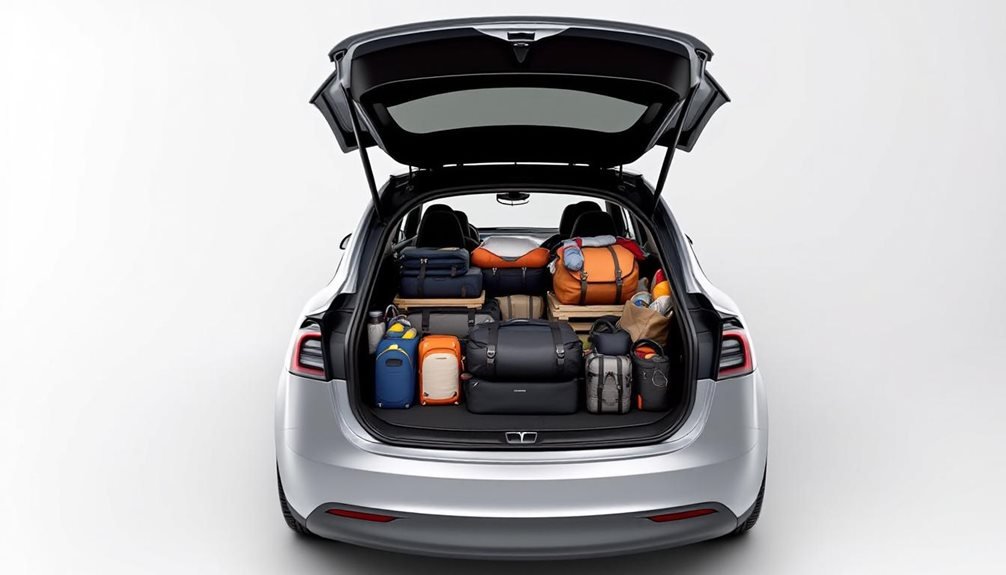
Tesla’s trunk space ranges from surprisingly spacious to downright massive, depending on which model you choose. The Model 3 offers 682 liters total—decent for groceries but forget hauling camping gear. Model Y jumps to 2,158 liters, easily fitting mountain bikes and large suitcases. Model X dominates with 2,487 liters, while Cybertruck promises around 3,540 liters of utility. Tesla’s own specs sometimes contradict themselves, making real-world capacity the only metric that matters.
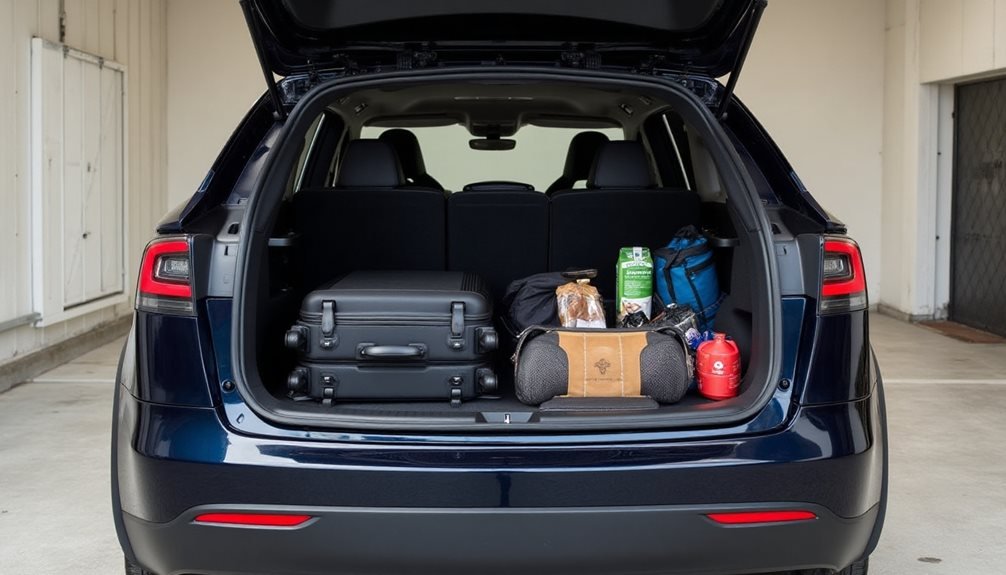
How much stuff can you actually cram into a Tesla? The answer depends on which Tesla you’re talking about, and frankly, the numbers are all over the place. For instance, the Model S offers a spacious trunk along with additional storage under the front hood, while the Model 3 has a more compact design but still provides decent cargo space. When considering customization options, it’s also important to factor in the tesla wrap cost breakdown 2025, as adding a unique finish can affect overall usability and aesthetics. Ultimately, whether you’re packing for a road trip or hauling supplies, understanding your Tesla’s capacity can help you make the most of your journey.
The Model Y leads the practical pack with 2,158 liters of total cargo space. That’s 76.2 cubic feet if you’re still thinking in old-school measurements. Break it down: 854 liters in the rear trunk with seats up, plus 117 liters in that front trunk everyone calls a “frunk.” Tesla claims you can fit two mountain bikes back there. Or camping gear. Or whatever else you’re hauling around.
The Model 3 gets the short stick. Just 682 liters total. The rear trunk manages 594 liters with seats up, and the frunk adds a measly 88 liters. It shares 75% of its parts with the Model Y but somehow lost most of the storage space in translation. The Model 3 handles a week’s groceries comfortably but struggles with larger recreational gear.
Model X owners get bragging rights with 2,487 liters total. The rear trunk alone holds 1,090 liters, and that 200-liter frunk is the biggest in the lineup. Those folding seats actually mean something here.
Then there’s the Cybertruck. Tesla estimates 3,540 liters total capacity, though details remain fuzzy. The open bed design supposedly handles 200 liters up front, but specific rear measurements? Good luck finding those.
The frunk concept still feels weird. Model Y’s frunk measures roughly 70 cm wide with 43 cm height. It’s separate from the main trunk, so your groceries won’t slide into your gym bag. The depth hits 35 cm, enough for chargers and random stuff. Access requires either the key fob, Tesla app, or touchscreen controls to unlock the compartment.
Real-world usage varies wildly. Model Y supposedly fits multiple large suitcases, while Model 3 owners make camping gear work despite the cramped space. The under-floor storage compartments help with emergency kits and tools. The Model Y’s hatchback design provides better cargo access compared to traditional sedan trunks.
Tesla’s own numbers sometimes contradict each other. Their manual claims 64.6 cubic feet for Model Y, but other specs list 76.2. Data inconsistencies aside, the Model Y and X clearly win for hauling capacity, while Model 3 owners learn to pack creatively.
Frequently Asked Questions
Can Tesla Trunk Space Accommodate Golf Clubs or Ski Equipment?
The Model Y handles both golf clubs and ski equipment pretty well. Two golf bags fit snugly in the rear trunk without removing drivers.
For skiing, fold those second-row seats down and you’ve got 78.7 inches of length for standing skis. The front trunk adds extra space for smaller gear.
With 64.6 cubic feet total capacity, weekend warriors get plenty of room for their toys.
Does Opening the Trunk Affect Tesla’s Battery Range or Efficiency?
Opening the trunk absolutely hammers Tesla’s battery efficiency. Aerodynamic drag skyrockets with the trunk open, forcing manual driving mode and killing range.
Worse yet, if it doesn’t close properly, vampire drain kicks in—up to 10 miles vanish overnight as the car stays awake.
No app alerts either, so drivers might not even know they’re bleeding battery while parked.
Are There Aftermarket Accessories to Maximize Tesla Cargo Organization?
Tesla owners can buy plenty of aftermarket cargo accessories to tame their trunk chaos. Custom-fit organizers and dividers create compartments. Foldable nets keep small stuff from rolling around like ping-pong balls. Telescopic poles manage vertical space, while modular drawers slide under the trunk floor.
Add-on hooks provide hanging points. These accessories work because Tesla’s minimal built-in storage leaves owners scrambling for organization solutions.
How Does Wet or Dirty Cargo Affect Tesla’s Interior Materials?
Wet or dirty cargo can mess up Tesla’s interior materials, but the company designed newer models with stain-resistant fabrics. Cloth areas around seat perimeters remain vulnerable though.
Cargo liners act as shields, using waterproof rubber or plastic that handles spills easily. Without protection, liquids seep into surfaces, causing permanent damage.
Tesla’s materials resist basic dirt, but mud and liquid still win if left untreated.
Can You Sleep in a Tesla With the Seats Down?
Yes, people can sleep in a Tesla with the seats folded down.
The flat cargo floor stretches 270 cm long and 129.5 cm wide—enough for most adults.
However, the 18-inch trunk opening height means no sitting up.
Climate control keeps things comfortable, but there’s no built-in mattress.
It’s basically emergency camping, not luxury accommodations.
Works for naps, not exactly glamping.