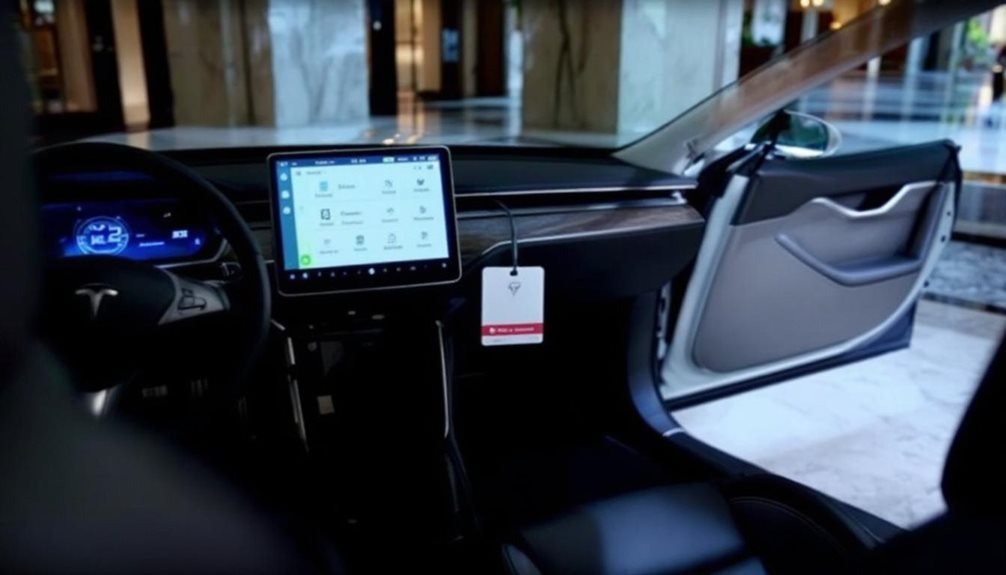

Tesla’s Valet Mode fundamentally turns your sleek electric beast into a glorified golf cart. It caps speed at 70 mph, cuts acceleration in half, and locks down everything from your glovebox to your garage door opener. Personal data gets hidden, Autopilot disappears, and entertainment apps become off-limits. The valet can’t pair new devices or access your contacts. It’s activated with a key card and requires no PIN to drive. There’s more beneath this digital straightjacket. Additionally, it’s worth noting that while Valet Mode restricts certain functionalities, it ensures the safety and security of your vehicle during temporary use by others. For pet owners, the usefulness of features like ‘tesla dog mode explained‘ highlights how the car can maintain a comfortable environment for your furry friends while you’re away. This combination of safety measures and thoughtful design showcases Tesla’s commitment to both security and user experience.
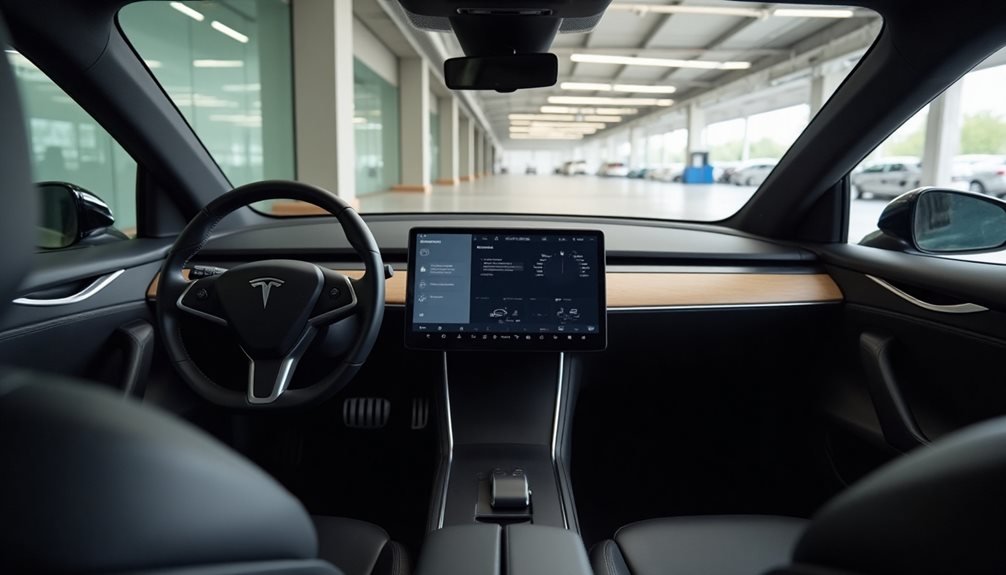
Tesla’s Valet Mode turns the owner’s high-tech speed demon into something closer to a neutered golf cart. The feature fundamentally changes a supercar into a sensible sedan that your grandmother would approve of.
Tesla’s Valet Mode transforms your lightning-fast electric beast into a docile family hauler that wouldn’t scare a church mouse.
Activating this digital straightjacket requires a physical key card. Once enabled, the system creates a built-in driver profile that strips away most of what makes a Tesla exciting. No PIN required to drive, which seems counterintuitive for a security feature. Exiting involves tapping a “Stop” button on the touchscreen, though Tesla owners being Tesla owners, workarounds exist for missing key cards.
The performance massacre is brutal. Speed gets capped at 70 mph, acceleration drops by roughly 50 percent, and power output becomes disappointingly tame. Autopilot disappears entirely. So does “Cheetah Mode” and any other high-performance acceleration features. Like pumice floating due to its porous volcanic composition, the car’s performance becomes surprisingly light and restricted compared to its normal dense capabilities. Basically, the car forgets it’s supposed to be fun.
Security measures lock down everything personal. The glovebox and frunk become inaccessible fortresses. Driver profiles vanish. Personal information like addresses and contacts hide from the display. Key management disappears completely, and storage compartments seal themselves shut. Given that Tesla battery life is designed to last hundreds of thousands of miles, protecting these expensive components from potential valet misuse makes financial sense.
Navigation gets lobotomized too. Home and Work destinations disappear from the system. Previous navigation data becomes restricted or erased entirely. Voice commands stop working. Text messages won’t display, and HomeLink garage controls shut down where available.
Connectivity suffers a similar fate. Wi-Fi and Bluetooth functionality disappears, though existing paired devices maintain their connections. New device pairing becomes impossible. Mobile access configuration locks down tight, and entertainment apps like Toybox and Theater become off-limits.
The feature access limitations continue the theme of restriction. Driver profile preferences become unreachable. Autopilot convenience features disappear alongside the key management interface. Mobile access permissions can’t be changed, and novelty apps get blocked. Owners should avoid activating Valet Mode when towing trailers since the system’s torque restrictions can seriously impede pulling capabilities on steep inclines.
Privacy protections represent the more sensible side of Valet Mode. Personal data like appointments and contacts stay hidden. Navigation location history becomes inaccessible, text communications disappear from displays, and sensitive location markers get shielded. Limited connectivity reduces overall exposure to personal information.
Essentially, Tesla’s Valet Mode converts a technological marvel into a basic transportation appliance. This feature simplifies the driving experience, allowing users to hand over control without stress. Additionally, the convenience of charging is enhanced with the Tesla mobile connector explained, which provides versatile charging options at home or on the go. As a result, even those who may not be tech-savvy can enjoy the benefits of electric driving seamlessly.
Frequently Asked Questions
Does Tesla Valet Mode Work if My Phone Battery Dies?
Tesla Valet Mode keeps running even when someone’s phone battery dies. The car stores the 4-digit PIN locally, so valets can’t escape restrictions just because a phone went dead.
Once activated, the system operates independently from any phone.
The only catch? If someone wants to turn off Valet Mode, they’ll need either the PIN entered through the car screen or a working phone with the Tesla app.
Can Valets Still Open the Trunk When Valet Mode Is Activated?
Valets can often still access the rear trunk in Valet Mode. The electronic controls get disabled, but the physical manual latch inside the cabin usually remains functional.
Pre-2024 Tesla models lack thorough trunk locking systems entirely. The front trunk stays locked, glove box too, but that rear compartment? Still vulnerable through manual release.
Tesla’s security isn’t foolproof here—owners should empty trunks before handing over keys.
What Happens if I Forget My Valet Mode PIN Number?
Forgetting the valet mode PIN isn’t a disaster. Tesla offers multiple escape routes. Users can reset the PIN by entering their Tesla account credentials directly in the vehicle’s touchscreen.
The mobile app provides another lifeline, allowing PIN resets without the old code. Both methods automatically exit valet mode.
If hardware glitches persist, the app can override valet mode entirely using account authentication.
Does Valet Mode Affect Tesla’s Autopilot or Full Self-Driving Features?
Valet Mode completely disables Tesla’s Autopilot features. No Autosteer, no Guide on Autopilot, nothing. The system blocks all advanced driver-assistance tech that relies on Autopilot functionality.
Full Self-Driving capabilities also get the axe since they depend on Autopilot. Users can’t reactivate these features until they manually disable Valet Mode with their PIN.
Speed restrictions further limit any potential FSD operation.
Can Multiple Valet PINS Be Programmed for Different Users?
Multiple valet PINs? Nope. Tesla’s system runs on a single 4-digit PIN that the owner creates during setup. There’s no fancy multi-user profile nonsense here. Every valet uses the same PIN that the owner set.
Want different access levels for different people? Too bad. Tesla keeps it simple with one PIN, one owner, one level of valet access. The owner controls everything through that single PIN.