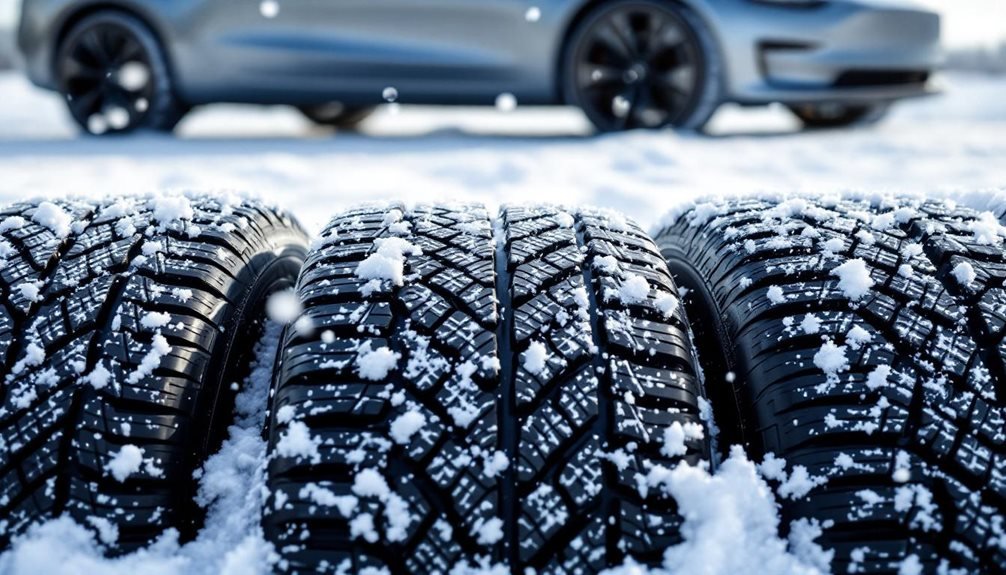

Tesla owners need winter tires when temperatures drop below 40°F because all-season tires become dangerously inadequate on ice. Top options include Michelin X-Ice Snow for directional precision, Pirelli Winter Sottozero 3 for premium grip, and Continental WinterContact recommended by Tesla guides. Bridgestone Blizzak excels in extreme conditions. These specialized tires cost $150-$200 each but prevent costly accidents. Tesla’s instant torque makes proper winter rubber essential, not optional. Grasping specific fitment requirements reveals vital compatibility details.
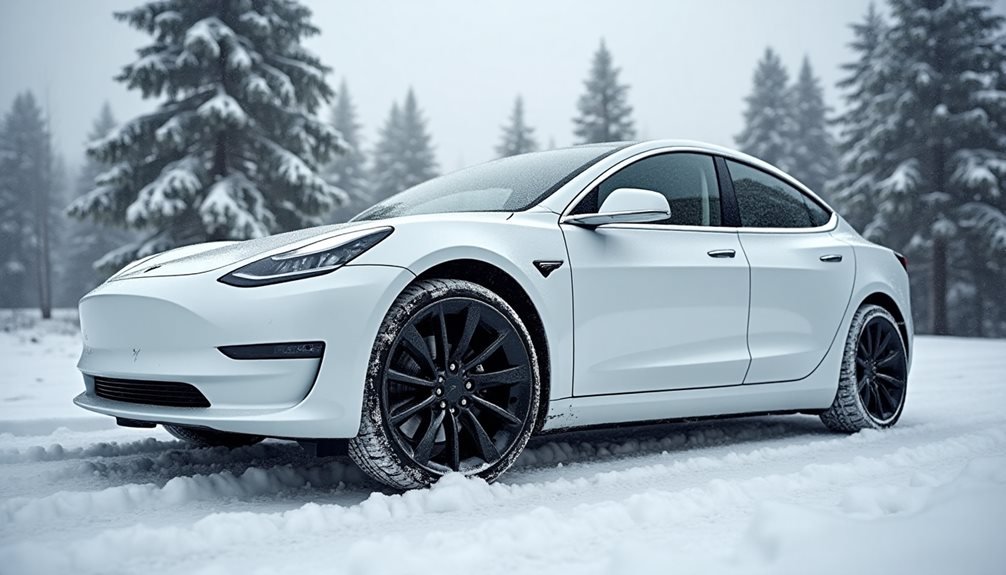
When temperatures drop below 40°F, Tesla owners face a harsh reality: their high-tech electric vehicles need old-school winter tires to avoid sliding around like hockey pucks on ice.
Tesla’s instant torque delivery makes winter grip absolutely critical. That lightning-fast acceleration becomes a liability when roads turn slippery. All-season tires? Forget about it. They’re about as useful as sunglasses in a blizzard once freezing temperatures hit.
Tesla’s instant torque becomes a dangerous liability when winter roads turn your high-tech EV into an expensive sliding disaster.
The Michelin X-Ice Snow leads the pack for Tesla winter performance. Its directional precision tread cuts through snow and ice like a hot knife through butter, evacuating slush with surgical precision. Tesla drivers swear by its traction and durability during brutal Canadian winters.
Pirelli’s Winter Sottozero 3 brings premium grip with PNCS noise-reduction technology. Nobody wants their cabin sounding like a cement mixer, especially Tesla owners accustomed to whisper-quiet rides. The foam inserts kill road vibration dead.
Continental WinterContact and Bridgestone Blizzak round out the top choices. Blizzak excels in extreme conditions, particularly for larger wheel sizes on Model Y. Continental offers balanced snow-ice performance that Tesla guides actually recommend.
Here’s where tire tech gets serious. Specialized rubber compounds stay flexible below freezing while regular tires turn rock-hard. Look for the Three-Peak Mountain Snowflake symbol—it’s the real deal, not marketing fluff. Regular tire pressure checks become even more crucial during winter months when cold temperatures naturally reduce tire inflation.
Most Tesla winter packages come pre-mounted with sensors and balancing complete. TPMS integration means seamless swaps without electronics headaches. Tesla Shop offers officially endorsed packages that match OE specs perfectly.
Sizing matters tremendously. Model 3 typically runs 18-inch setups, while Model Y can accommodate 20-inch wheels for those preferring larger diameters. Early versus late production years affect compatibility, so check bolt patterns carefully.
Premium winter tires cost $150-$200 each due to advanced technology. TIRECRAFT and Tesla-authorized sellers provide expert fitting and model-specific matching. Tesla’s heavy battery packs create unique weight distribution requirements that demand winter tires specifically engineered to handle these characteristics. The savings from Tesla’s lower maintenance costs compared to traditional gas vehicles can help offset the initial investment in quality winter tire packages.
Winter driving without proper tires converts Tesla’s leading-edge engineering into expensive liability. Load and speed ratings must align with original equipment parameters. Smart Tesla owners recognize that winter tire investment beats expensive bodywork repairs every single time.
Frequently Asked Questions
Do Tesla Winter Tires Affect the Vehicle’s Warranty Coverage?
Tesla winter tires don’t mess with warranty coverage, surprisingly enough. The company’s standard warranty excludes all tires anyway – winter, summer, whatever.
Third-party winter tires like Michelin won’t void anything if installed properly. Tesla-authorized service centers should handle installation to avoid headaches. Keep receipts and documentation just in case.
The separate Wheel and Tire Protection Plan covers road hazards independently.
Can I Use Winter Tires Year-Round on My Tesla?
Tesla owners can technically run winter tires year-round, but it’s not smart.
The softer compounds wear 1.5-2x faster on dry pavement, meaning earlier replacements.
Winter tires also lose grip on hot roads, actually increasing stopping distances when temperatures climb above freezing.
Sure, it eliminates seasonal swaps, but drivers will sacrifice performance and money.
Physics doesn’t care about convenience.
How Much Do Tesla Winter Tire Installations Typically Cost?
Tesla’s official winter tire installations run $2,000-$2,750 for complete packages. That includes wheels, tires, sensors, and installation at service centers.
Third-party options slash costs to roughly $1,500-$2,000, but you’re doing the work yourself. Tire Rack can save $200-$500 compared to Tesla’s pricing.
Installation alone varies by location, but Tesla bundles everything together. No à la carte pricing here.
Will Winter Tires Reduce My Tesla’s Electric Range Significantly?
Winter tires will absolutely crush a Tesla’s range. Real-world data shows consumption jumping from 130Wh/km to 190-200Wh/km – that’s a brutal 46-54% increase.
The softer rubber compounds and aggressive tread patterns create higher rolling resistance, sucking down battery power.
In extreme winter storms, consumption can spike to 230Wh/km. Cold weather makes it even worse, creating a perfect storm for range anxiety.
Are There Specific Winter Tire Pressure Recommendations for Tesla Vehicles?
Tesla doesn’t get fancy with winter tire pressures. The company sticks to standard recommendations: 42 psi for most Model 3s and Ys, following whatever’s on the door jamb placard.
No special winter exceptions documented.
Cold weather drops pressure naturally, so drivers might need an extra psi or two to compensate.
The TPMS keeps tracking year-round, winter tires or not.