

Wrapping a Tesla costs $2,500 to $6,000 for professional installation in 2025, depending on the model. A Model 3 runs $2,500-$3,500, while the massive Cybertruck can hit $6,000. DIY materials cost just $500-$1,500, but good luck not screwing up those curved panels. Tesla’s official wrap service charges $4,000-$4,500 but offers limited colors. Urban shops charge 10-15% more because rent isn’t cheap. The numbers tell only part of this increasingly complicated story.
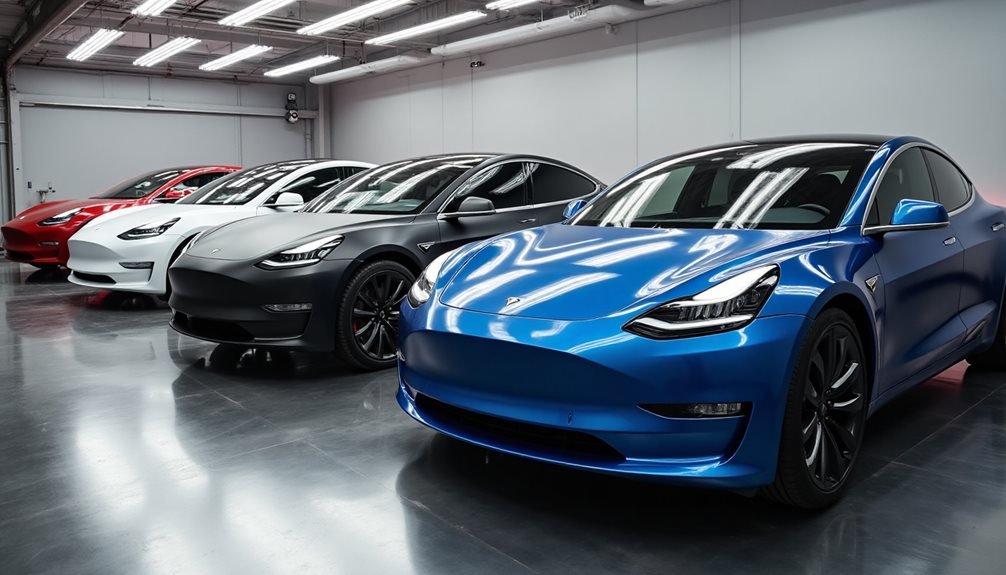
How much does it actually cost to wrap a Tesla? The answer depends on whether you’re willing to sweat over a heat gun or hand over serious cash to professionals. If you choose to do it yourself, you might spend anywhere from $200 to $600 on materials, depending on the quality of the wrap. However, hiring professionals could set you back between $2,000 and $5,000 for a full wrap, making it a significant investment in terms of both time and money. It’s essential to factor this into your buying a Tesla considerations, as the added cost could influence your overall budget and ownership experience.
Professional wraps aren’t cheap. Model 3 owners face $2,500 to $3,500 bills, while Model Y drivers pay $3,000 to $4,000. Model S pricing jumps to $3,500-$5,000, and Model X costs hit $4,000-$5,500. The Cybertruck? Expect $4,000 to $6,000 for professional installation.
Professional Tesla wraps hit your wallet hard: $2,500 for Model 3 up to $6,000 for Cybertruck installation.
These prices include labor, high-quality vinyl, and surface prep—basically everything except your tears when you see the final invoice.
DIY enthusiasts can slash costs dramatically. Materials run $500-$800 for Model 3, $600-$900 for Model Y, $700-$1,000 for Model S, $800-$1,200 for Model X, and $900-$1,500 for Cybertruck.
The catch? You’ll need tools, workspace, and patience. Heat guns, cutters, and squeegees become your new best friends.
Labor costs typically double or triple DIY material expenses. Professional installers handle complex panels without creating bubbled disasters. They know how to steer through curved surfaces that make DIY attempts look like high school art projects gone wrong.
Material quality matters. Standard 5ft × 59ft rolls cost $579-$609, but premium cast films run 20-50% higher than standard calendared options.
Metallic or satin finishes add another $200-$500. Curved panels on Model X and Cybertruck demand more material, driving costs up further. Chrome wraps command the highest prices at approximately $169 per roll due to their highly reflective finish.
Tesla now offers official wrap services for Model 3, Model Y, and Cybertruck at $4,000-$4,500. Limited color options include Tesla-branded finishes like black and white.
The service promises Tesla-verified application and potentially aligned warranty coverage.
Location affects pricing too. Urban installers charge 10-15% more than rural providers.
Seasonal demand peaks can trigger mid-year price increases, especially for holiday-themed designs.
Wraps protect factory paint and allow reversible customization lasting 5-7 years with proper maintenance. Tesla models typically require between 58 to 64 feet of vinyl material for complete coverage, which directly impacts the total cost of your wrapping project.
However, improper DIY removal risks paint damage. Partial wraps reduce costs by 30-50%, offering budget-conscious alternatives to full coverage.
The choice between professional perfection and DIY escapade ultimately depends on your wallet’s patience and your tolerance for potential mistakes.
Frequently Asked Questions
How Long Does a Tesla Wrap Installation Typically Take?
Tesla wrap installations typically take 3-4 business days for full coverage. Partial wraps need 1-2 days, depending on complexity.
The Cybertruck takes the longest—up to 4 days—thanks to those angular panels. Model 3s usually finish in 3 days. PPF applications follow similar timelines.
Surface prep adds extra hours. Weather matters too—humidity slows things down.
Certified installers work faster, but booking slots? That’s 4-6 weeks out.
Can I Wrap My Tesla Myself or Do I Need Professional Installation?
Tesla owners can absolutely wrap their cars themselves, but it’s basically asking for trouble. DIY requires specialized heat guns, cutting tools, and a climate-controlled workspace.
Materials alone cost $500-$1,500, plus equipment investments. The Cybertruck’s complex panels demand multiple helpers and serious patience.
Meanwhile, professionals charge $2,500-$6,000 but deliver bubble-free finishes, warranties, and won’t accidentally damage the paint during removal.
Will Wrapping My Tesla Void the Manufacturer’s Warranty?
Wrapping a Tesla partially voids the manufacturer’s warranty — specifically the paint warranty gets nuked. Tesla’s official stance is crystal clear: mechanical and electrical warranties remain untouched, but paint protection? Gone.
The catch is removal must be done professionally to avoid damaging the paint underneath. Screw up the removal process, and owners face potential paint damage that’s completely on them to fix.
How Long Does a Tesla Wrap Last Before Needing Replacement?
Tesla wraps typically last 3-7 years before needing replacement. Premium vinyl from brands like 3M can hit that seven-year mark with proper care.
Budget materials? Not so much. UV rays, road salt, and neglect will shorten that lifespan fast.
Signs it’s time for replacement include peeling, fading, bubbling, or that sad, dulled-out look.
Coastal Tesla owners often see replacement needed around five years.
Can I Remove a Tesla Wrap Without Damaging the Original Paint?
Tesla wraps can be removed without paint damage if done properly.
The key is thorough washing beforehand, using heat to keep vinyl pliable, and pulling toward the body instead of yanking upward.
Heat guns work best for precision.
Older wraps get brittle though, making removal trickier.
Some adhesive residue is normal and comes off with isopropyl alcohol.
Rushing the process is where people screw up.