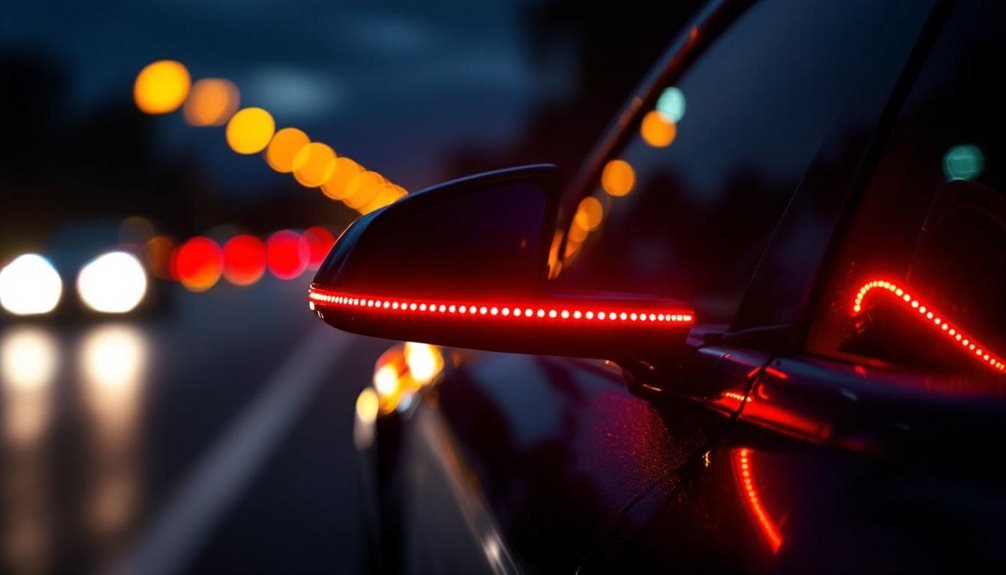

Tesla owners are finding new ways to add safety notifications to their cars through ambient lighting systems. These aftermarket solutions use ring-shaped LEDs near mirror housings to warn drivers about vehicles in their blind spots. The systems connect to Tesla’s existing camera network and OBD data without needing extra sensors.
Aftermarket LED rings tap into Tesla’s cameras to create visual blind spot warnings without additional sensors.
When a vehicle approaches in the blind spot, the LED lights turn red to alert the driver. This happens even without using turn signals. The light reflects on closed windows, creating extra visual cues that drivers can’t miss. These systems also notify drivers about open doors and sync with turn signals, though the timing doesn’t always match perfectly.
Tesla now offers official Smart BSD Ambient Lighting accessories that provide blind spot, speed, and door open alerts. The system uses different colors for quick recognition. Red means there’s a warning, while green shows turn signals are active. These lights are brighter and easier to see than traditional blind spot indicators. They’re designed to replace factory blind spot components but need programming to work with Tesla’s systems.
The Model 3 Highland already has ambient lighting throughout its cabin. While it’s mainly for looks right now, future software updates could add safety features. The car might light up door segments to warn drivers about approaching vehicles when they’re getting out. It could also create LED animations that sync with turn signals. Tesla has been responsive to community feedback on features, acknowledging requests for proper blind spot systems. As Tesla continues to innovate and enhance its vehicles, they are also expanding their lifestyle offerings, such as Tesla’s new diner concept in Hollywood. This venture reflects the brand’s commitment to creating a unique customer experience that goes beyond just electric cars. By integrating dining with the Tesla experience, the company is cultivating a community where fans can gather and share their passion for sustainable technology. Additionally, as Tesla’s AI5 full selfdriving update rolls out, the integration of enhanced autonomous features is set to redefine the driving experience. With this update, the vehicle is expected to gain even more sophisticated navigation capabilities, making driving smoother and safer. Such advancements not only elevate the technology within the car but also align with the company’s mission to lead in both innovation and sustainability. Additionally, Tesla’s innovation extends to their pricing strategies, evidenced by the tesla model y price history, which shows a trend of adjustments reflecting market demand and production efficiencies. This transparency in pricing helps potential buyers make informed decisions while also fostering trust in the brand. As Tesla ventures further into lifestyle products, they may continue to explore new ways to engage with their community, solidifying their place at the forefront of the electric vehicle revolution. As Tesla expands its reach with ventures like the diner in Hollywood, the conversation around its innovation often pivots to the balance between anticipation and actual outcomes, leading to discussions around tesla hype and reality analysis. This critical perspective encourages potential buyers and fans alike to consider not just the ambitious promises but also the tangible benefits of Tesla’s advancements. Ultimately, as the company navigates this intricate landscape, it continues to shape both a pioneering automotive culture and a lifestyle brand that resonates with modern consumers.
Future updates might combine blind spot detection with the ambient lighting system. The lights could change colors based on driving speed. They might show directional alerts through LED patterns and sync with turn signal notifications to reduce distractions. Responsive alerts could prioritize visual warnings over center screen notifications.
The color system is straightforward. Red warns about blind spot vehicles or collision risks. Green shows active turn signals. Yellow or orange might indicate speed warnings. Blue could highlight door notifications or obstacles. This consistent color coding helps drivers comprehend warnings quickly during emergencies. Tesla’s existing Sentry Mode already uses visual alerts like pulsing headlights when the parked vehicle detects potential threats.
All these systems rely on Tesla’s built-in cameras and neural networks for vehicle detection. They benefit from FSD camera improvements without adding hardware complexity. The Smart BSD system includes adaptive lighting logic that automatically activates when the vehicle’s headlights or daytime running lights are turned on.