Tesla’s Full Self-Driving system works differently in Europe than it does in North America, and the changes are significant. The company’s made substantial modifications to meet European regulations and road conditions. These differences reflect the strict rules that European governments have put in place.
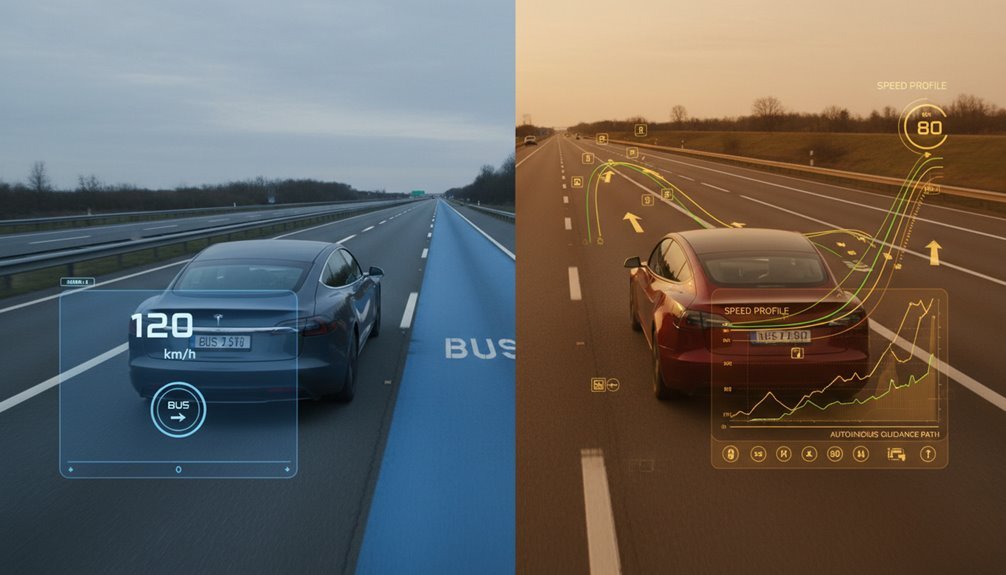
One major change is how speed works. In North America, Tesla’s FSD shows detailed speed profiles to drivers. In Europe, the system displays only a simple maximum speed setting. Drivers can set the maximum speed up to 10 kilometers per hour above the posted limit in European zones. This change directly addresses European regulatory concerns about vehicle safety and control.
In Europe, Tesla’s FSD uses simplified maximum speed settings rather than detailed profiles, allowing drivers to exceed posted limits by up to 10 kilometers per hour.
Tesla’s also split up features differently in Europe. Guidance on Autopilot isn’t standard anymore—it’s a separate purchase option. Self-parking and lane-changing capabilities require extra activation and separate fees. The company introduced “Hands-Ready mode” specifically for European compliance. This mode requires drivers to stay more engaged with the vehicle than the North American version does.
The regulatory environment made these changes necessary. European regulations are described as “outdated and rule-based,” which made Tesla’s original FSD system illegal in current form. UK draft regulations particularly conflict with Tesla’s supervised autonomy model by requiring drivers to keep their hands on the wheel at all times. The UNECE mandates stricter safety protocols for autonomous vehicles across 54 member states, further constraining Tesla’s deployment options.
Tesla’s preparing for a European rollout starting in 2026. The company expects to get approval from the Netherlands’ RDW authority in February 2026 as its entry point into the EU market. The plan involves a “national exemption” approach that could potentially lead to EU-wide recognition.
Tesla’s already executed over 1 million kilometers of internal testing across 17 European countries. The company’s demonstrated the system to authorities in nearly all European countries and is planning demonstration programs in major German cities like Berlin and Munich.
The software itself has been modified too. Tesla trained its European version with different neural networks designed specifically for European road conditions and traffic patterns. The system recognizes European-specific infrastructure like bus lanes differently than the North American version.
Not everyone’s pleased with these changes. Some argue they make the system less capable than its North American counterpart. Others question whether the modifications truly address safety concerns or simply comply with regulations.