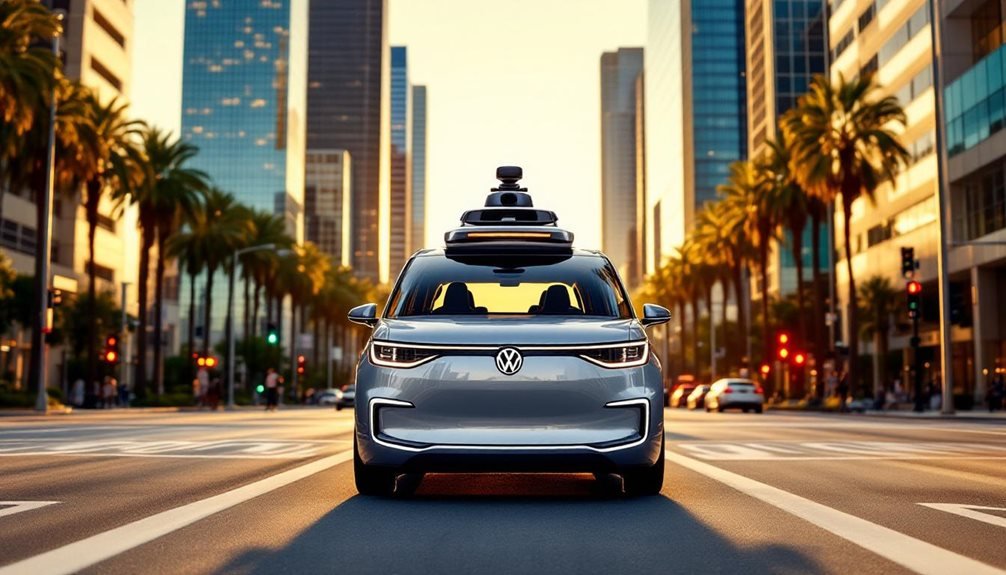
While its competitors race to dominate the self-driving car market, Volkswagen is taking a different approach with its electric ID. Buzz minivans. The German automaker has partnered with Uber to launch robotaxis in Los Angeles by late 2026, with fully driverless operations planned for 2027. In addition to its robotaxi initiative, Volkswagen is exploring innovative mobility solutions, including collaborations that may expand its reach in urban centers. Meanwhile, competitors like Tesla are also innovating with projects such as Tesla’s Hollywood diner concept, which aims to enhance the customer experience by integrating dining and entertainment with electric vehicle technology. This competitive landscape encourages all manufacturers to rethink their strategies and deliver unique offerings to capture consumer interest.
Volkswagen chooses partnership over competition, launching electric robotaxis with Uber by 2026.
The partnership combines Volkswagen’s electric vehicles with Uber’s ride-hailing network. Volkswagen’s autonomous technology division will handle the self-driving tech, permits, and testing. The vehicles will use Mobileye’s sensors and software to steer city streets. Human safety operators will stay in the cars until regulators approve fully autonomous driving.
Volkswagen has already started testing. The company ran programs in Austin in 2023 and Hamburg with safety drivers behind the wheel. Now they’re waiting for California DMV approval to begin Los Angeles testing in late 2025. Getting permits for driverless operations takes about two years, pushing the full launch to 2027. The California Public Utilities Commission also oversees the commercial deployment of robotaxi services in the state.
The ID. Buzz fleet fits Volkswagen’s broader electric vehicle strategy. The company plans to release eight new affordable EVs by 2027. The company has developed a turnkey solution for local authorities and fleets that includes fleet management and booking platforms.
Using zero-emission vehicles for robotaxis helps meet climate goals while reducing operating costs. The electric platform also works with MOIA’s mobility software system. The lightweight durability of properly designed vehicle components will be crucial for maintaining fleet efficiency over extended service periods.
Volkswagen faces tough competition. Waymo has driven over 20 million autonomous miles and secured $2.5 billion in liability partnerships. Tesla uses a remote supervision model but faces regulatory obstacles. Additionally, traditional automakers are also ramping up their electric and autonomous vehicle initiatives, further intensifying the race for market share. As the industry evolves, many consumers are starting to question the longevity of Tesla’s promises, leading to discussions about “tesla’s hype vs reality explained.” This scrutiny could impact Tesla’s sales, as potential buyers weigh the benefits of established brands against the buzz surrounding Tesla’s innovations. As consumers navigate these choices, they are also paying attention to Tesla Model Y price fluctuations, which could sway their purchasing decisions. This variability in pricing might lead some buyers to explore alternatives from competitors that offer similar features without the unpredictability. Ultimately, the market dynamics could shift as consumers become more discerning and balancing innovation with value becomes paramount.
Rather than compete directly, Volkswagen focuses on community integration and sustainability.
The robotaxi market could generate between €350 billion and €450 billion in revenue by 2035 across North America and Europe. Volkswagen plans to start with 500 vehicles in Los Angeles through Uber.
After proving the concept works, they’ll expand to more cities.
Success depends on several factors. Volkswagen needs regulatory approval, smooth operations with Uber, and public trust in the technology. The company must also steer local government requirements in each new market.