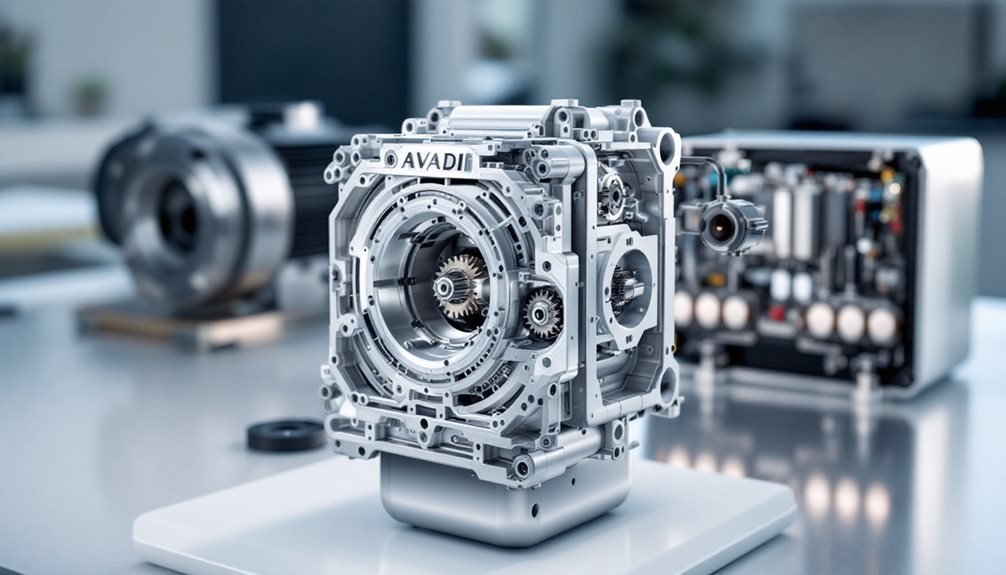
A tiny 24-pound engine is shaking up the electric vehicle world. While major automakers like Tesla push for all-electric futures and Toyota develops hydrogen fuel cells, a company called Avadi has created a revolutionary 250cc engine design that’s challenging what everyone thinks about green transportation.
The global hydrogen internal combustion engine market is growing fast. It’s expected to jump from $22.06 billion in 2025 to $51.76 billion by 2034. That’s a growth rate of nearly 10% each year. Europe alone will see its market expand from $9.04 billion to $21.48 billion during the same period. These numbers show that internal combustion engines aren’t disappearing anytime soon.
Avadi’s new engine doesn’t work like traditional designs. It uses two connecting rods and special pinion gears in what’s called a halfshaft configuration. This halfshaft is the engine’s core innovation. It turns the up-and-down movement of pistons into rotation in a completely new way. The company says this design will be more efficient than current internal combustion engines.
Avadi’s halfshaft configuration transforms piston movement into rotation through an innovative dual connecting rod and pinion gear system.
What makes hydrogen combustion engines special is their clean operation. They burn hydrogen with oxygen to create energy. The main byproduct is water vapor. While high temperatures do create small amounts of nitrogen oxides, these engines are much cleaner than those burning gasoline or diesel. They don’t produce any CO₂ emissions at all. Hydrogen vehicles can refuel in just 90 seconds to 5 minutes, matching the convenience of traditional gas stations.
Modern AI technology makes these engines even better. Smart sensors adjust fuel injection, ignition timing, and air-fuel ratios in real-time. This optimization improves efficiency and reduces emissions further. The engines also tend to be more powerful than many electric alternatives. Machine learning algorithms are now enhancing combustion processes to squeeze out maximum performance from every drop of hydrogen fuel.
One major advantage is infrastructure compatibility. Hydrogen combustion engines can use much of the existing infrastructure built for regular engines. This means factories don’t need complete overhauls. Mechanics already know how to work on similar systems. The technology provides a practical pathway to cleaner energy without throwing away everything we’ve already built.
For long routes where electric vehicle charging stations don’t exist, hydrogen combustion offers a solution. Industries that need high performance and established energy systems can shift without sacrificing power or reliability.