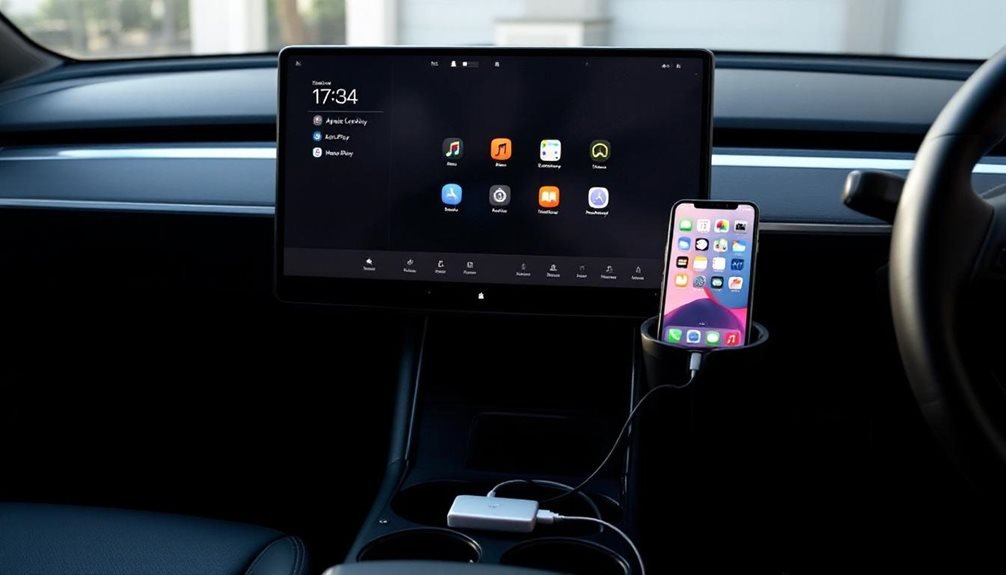

Why don’t Tesla cars work with Apple CarPlay? The answer lies in competing visions for in-car technology. Tesla has chosen to develop its own infotainment system rather than integrate Apple’s popular platform. As of 2025, no Tesla vehicle offers official CarPlay support.
Tesla focuses on its proprietary software ecosystem, including the Tesla app and built-in navigation. The company’s vertical integration strategy means they control every aspect of their vehicles’ technology. This not only enhances the user experience but also allows for seamless updates and improvements over time. One notable feature of this ecosystem is the Tesla road trip navigation advantages, which optimally plans routes based on charging station locations and vehicle range. By leveraging real-time data, Tesla ensures that drivers can travel long distances with peace of mind, minimizing downtime during their journeys.
Meanwhile, Apple has expanded CarPlay to many car manufacturers, but Tesla hasn’t joined them.
This absence hasn’t stopped Tesla owners from finding workarounds. The Carlinkit T2C adapter has become a popular solution, allowing wireless CarPlay and Android Auto connectivity in Tesla vehicles. These devices cost between $200 and $300 and work with all Tesla models. Newer wireless CarPlay devices available on Amazon can trick the Tesla into thinking it’s connected to a CarPlay head unit, operating through the Tesla browser while audio streams via Bluetooth.
However, installation presents challenges. Owners must deal with complex wiring and figure out where to mount the screen for ideal visibility.
Users report mixed experiences with these third-party solutions. Some find the Carlinkit devices work reliably, while others encounter connectivity issues.
The setup typically involves attaching a screen to the steering column. Once installed, owners can access full CarPlay functionality, though the interface combines elements from both Tesla and Apple systems.
Apple’s new CarPlay Ultra, launched with brands like Aston Martin and Hyundai, requires iOS 18.5 and newer iPhones. The platform now provides content for all driver screens, including instrument clusters and gauges, representing a major evolution from standard CarPlay.
There’s no indication Tesla will adopt this technology. The integration would require Tesla to grant Apple significant access to vehicle systems and screens, something that conflicts with Tesla’s control-focused approach.
Technical hurdles compound the challenge. Tesla’s hardware wasn’t designed for CarPlay compatibility.
The limited screen space and potential confusion between two different interfaces create additional obstacles. Tesla owners can access various vehicle monitoring features through the live camera functionality built into the app, but CarPlay integration remains elusive.
Some Tesla owners have found alternative solutions, like using Apple Watch integration to control certain vehicle functions.
Market pressure continues to build as consumers demand CarPlay access. Traditional automakers have embraced Apple’s system, leaving Tesla as a notable holdout.
Whether Tesla will eventually cave to user demands remains uncertain. For now, owners who want CarPlay must rely on aftermarket solutions and accept their limitations. As Tesla continues to innovate and redefine the driving experience, speculations about future updates persist. The upcoming 2026 Tesla Model X features are expected to showcase advancements in technology and user interface, potentially addressing the integration of popular apps like CarPlay. Until then, many Tesla users may find themselves navigating a waiting game, hoping for enhancements that could elevate their in-car experience. As Tesla’s expanding business model continues to evolve, the company may need to reconsider its approach to software integration to remain competitive. Meanwhile, enthusiasts and critics alike are watching to see if these external solutions will suffice or if a shift in Tesla’s strategy is on the horizon. The demand for seamless compatibility with popular features like CarPlay indicates a growing expectation among consumers for a more unified driving experience.