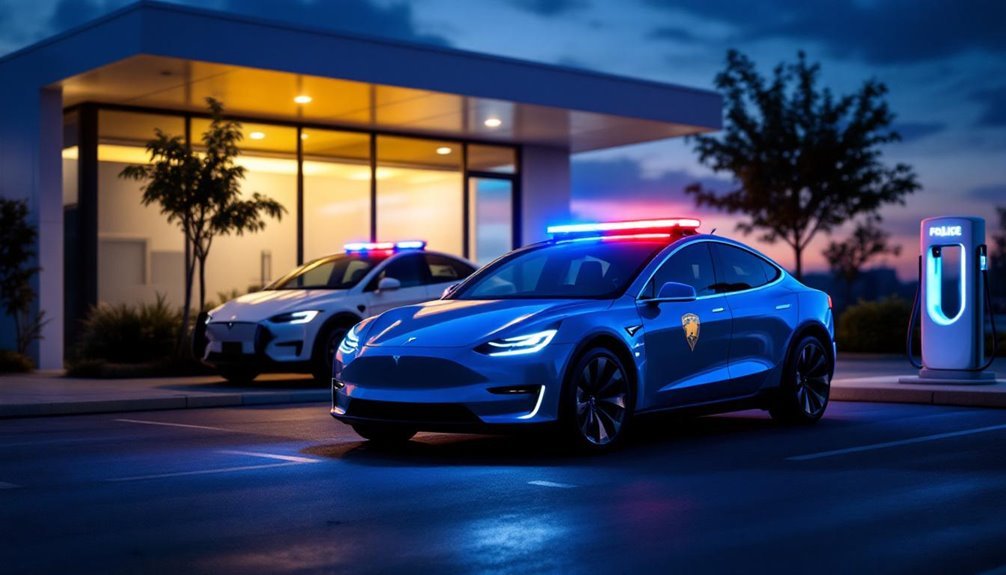
In a shift toward environmental responsibility, Carl Junction’s police department has begun replacing its traditional gasoline vehicles with Tesla electric vehicles. The decision stems from the city’s Climate Initiative policy, which pushes departments toward cleaner transportation options. Five of the department’s nine vehicles have already made the switch to electric models.
Carl Junction’s police department shifts toward environmental responsibility by replacing gasoline vehicles with Tesla electric models through its Climate Initiative policy.
The conversion to electric vehicles makes financial sense for Carl Junction. Officials calculated that buying Teslas costs less than replacing worn-out police cars with new gasoline models. Fuel savings also play a major role in the department’s decision. Long-term operational costs favor electric vehicles over traditional engines, according to projections the department reviewed.
However, the change isn’t simple. Police vehicles require special modifications that regular Teslas don’t have. Officers need ballistic panels installed for protection during dangerous situations. Traditional police vehicles from manufacturers like Ford and Chevrolet have established modification kits. Tesla’s unique design requires a different approach, and only one specialized company called Unplugged Performance handles Tesla police vehicle modifications.
This creates a significant challenge for Carl Junction. The modification facility sits about 500 miles from the department’s headquarters. Vehicle modifications take several months to complete, which slows down the shift process. The department also faces a shortage of technicians trained to maintain and service electric police vehicles.
Infrastructure problems add to the complications. Charging stations haven’t kept pace with the number of electric vehicles departments are acquiring. The limited network of certified technicians makes servicing difficult. Geographic distance impacts how quickly the department can access repairs and maintenance.
Other police departments are watching Carl Junction’s experience closely. Leawood already has 13 electric patrol vehicles rolled out with plans to convert 70 percent of its fleet. Multiple California departments are also evaluating Teslas for police work. However, early adopter departments report that current configurations make vehicles “nearly unusable” for some situations. Range limitations and different performance characteristics compared to traditional police cars present real operational challenges.
Despite these obstacles, Carl Junction continues its electric vehicle rollout. The department’s commitment reflects broader governmental push toward sustainability and environmental responsibility. Winter operations present additional considerations, as cold weather can reduce vehicle range by 20-30% without proper battery preconditioning systems.