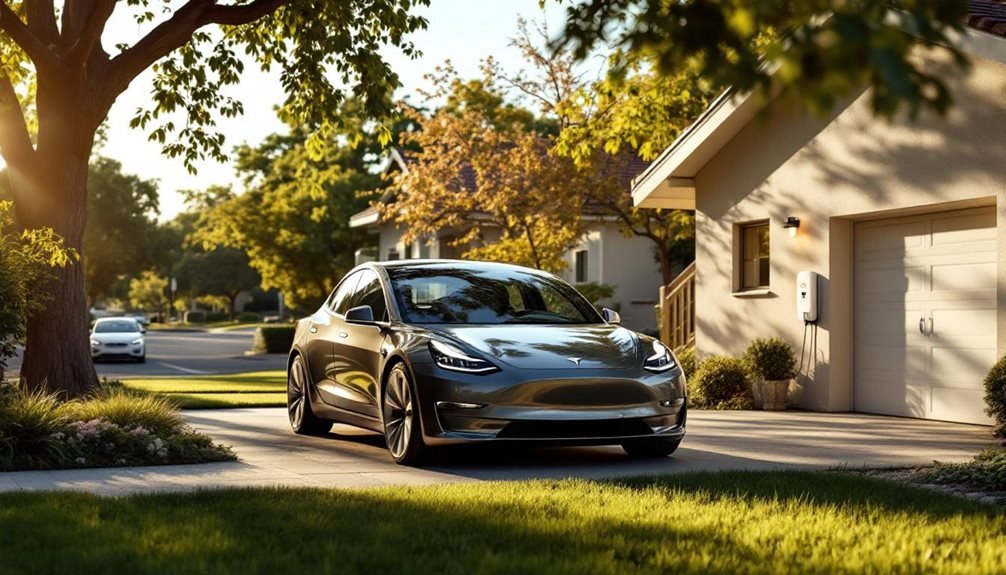
The path to owning a Tesla has shifted. In 2025, financing options‘ve made electric vehicles more accessible than ever before. It’s not just wealthy buyers who can drive home in a Tesla anymore.
Several factors have changed the environment. Tesla’s price reductions over the past few years brought entry-level models down considerably. The Model 3 now starts at a lower price point than many gas-powered cars. This shift opened doors for middle-class families to evaluate electric vehicles seriously.
Tesla’s price reductions have brought the Model 3 below many gas-powered cars, opening electric vehicle evaluation to middle-class families.
Financing companies’ve expanded their alternatives too. Banks and credit unions now provide competitive rates for Tesla purchases. Some lenders’ve created special programs specifically for electric vehicles. Monthly payments on a Tesla can rival payments on traditional cars when buyers choose the right financing terms.
Federal tax credits still play a major role. The $7,500 credit reduces the effective price of qualifying Tesla models. Some states offer additional incentives that lower costs further. These credits don’t require buyers to be rich. They’re available to anyone who meets the eligibility requirements.
Leasing’s become another popular route. Instead of purchasing, drivers can lease a Tesla for two or three years. Monthly lease payments tend to be lower than loan payments. Leasing also means no long-term maintenance costs since the vehicle stays under warranty.
Used Tesla inventory’s grown substantially. Certified pre-owned models cost less than new vehicles. They still come with warranties and reliable performance. Many buyers find used Teslas provide excellent value.
Insurance costs have decreased as well. More competition among insurers and increased availability of parts’ve brought rates down. Electricity’s cheaper than gas, reducing daily driving expenses.
Dealership financing packages now include various terms and down payment options. Some dealers offer zero-down deals to qualified buyers. Others provide extended payment periods to lower monthly costs.
Technology improvements’ve also helped. Better battery performance means vehicles last longer. Increased charging infrastructure makes ownership more practical for average families.
These developments don’t mean financing’s completely easy for everyone. Buyers still need good credit and stable income. However, the barriers that once kept Teslas out of reach for ordinary people‘ve definitely lowered. More families are realizing that electric vehicle ownership fits their budgets. However, potential buyers should consider that resale values dropped 27% year-over-year in 2025, which affects the long-term financial picture of Tesla ownership.