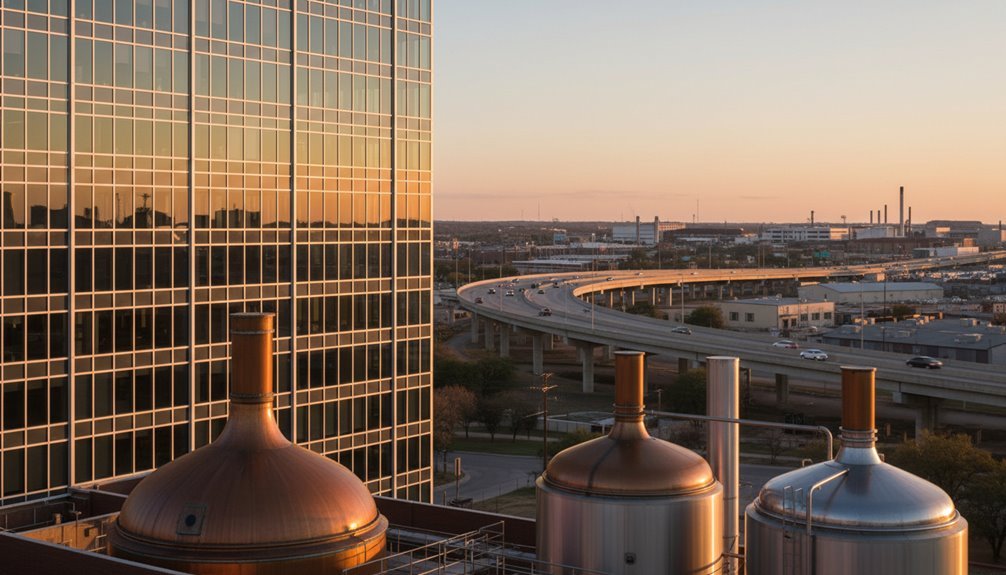

A flurry of major changes swept through Pabst Brewing Company in 2020. The company made three bold moves that year—relocating its headquarters, acquiring a brewery, and closing a taproom. Together, these decisions showed how a struggling brand could adjust to survive tough times.
Pabst moved its headquarters to the Rand Building at 110 E. Houston St. in downtown San Antonio. The shift placed the company in an urban center office building, though it kept its data center in San Antonio from its previous location. This move signaled the company’s commitment to staying rooted in Texas while modernizing its workspace. The relocation highlighted San Antonio’s growth as a corporate hub and demonstrated the city’s appeal to established manufacturers. In 2023, the company would later relocate to The Soto building as part of continued strategic real estate decisions. However, by late 2024, the company began seeking a subletter for its headquarters, suggesting renewed financial pressures despite the initial strategic investments.
That same year, Pabst exercised an option to purchase Molson Coors’s brewery in Irwindale, California. This acquisition was a big deal. It gave Pabst more control over its production capacity at a time when the company needed it most. The purchase followed a 20-year production agreement Pabst had signed with City Brewing Company in 2019. By gaining its own brewing facility, Pabst could shift production away from Molson Coors and strengthen its supply chain. The company’s ownership by Blue Ribbon Partners since 2021 provided the financial stability necessary to make such significant capital investments in production infrastructure.
Pabst’s purchase of Molson Coors’s Irwindale brewery gave the company production independence and strengthened its supply chain.
However, not everything expanded in 2020. Pabst closed its Milwaukee taproom due to the COVID-19 pandemic. The taproom had opened in spring 2017 on the original Pabst complex site and had featured newly developed and historic beers from the company’s portfolio. The space had been a refurbished former church and training center.
Though it closed, the site later found new life when Central Waters Brewing Company took it over in 2021.
These 2020 moves reflected Pabst’s broader strategy during a period of uncertainty. With ownership firmly in place through Blue Ribbon Partners—which had purchased the company in 2014—Pabst could make long-term decisions. The headquarters relocation established a permanent San Antonio presence. The brewery acquisition gave the company production independence.
And while closing the taproom was difficult, it was a practical response to pandemic challenges. Together, these moves positioned Pabst to survive and maintain its status as a cult brand during challenging times.