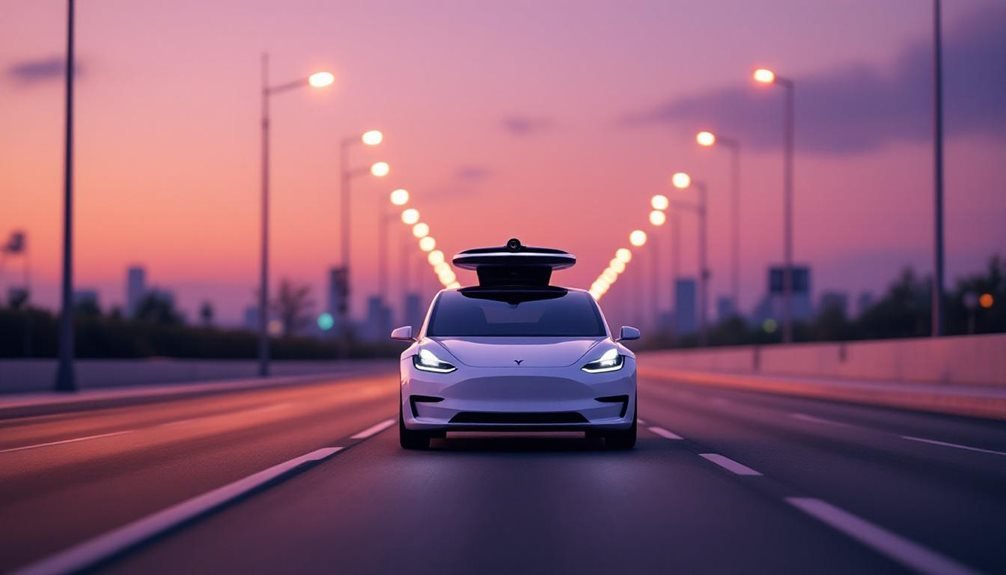

Stepping into a Tesla robotaxi in Austin last month, a passenger discovered something unexpected about self-driving cars. The vehicle operated like what riders called a “confident and cautious driver” during the pilot program that launched in June 2025 with paying customers.
Tesla’s latest safety data shows its Autopilot technology crashed once every 6.69 million miles in the second quarter of 2025. That’s about 9.5 times safer than the national average of one crash every 702,000 miles, according to government data from 2023. Cars without Autopilot crashed once every 963,000 miles based on Tesla’s reports.
The robotaxi can’t get tired after driving for hours. It doesn’t drink alcohol or text while driving. There’s no road rage or getting distracted by passengers. The system watches everything around it with cameras and sensors that see in all directions at once. It can react to dangers in milliseconds, faster than any human driver could.
These self-driving cars use computer programs that learn from millions of miles of driving data. They can predict what pedestrians might do and handle complex traffic situations. The technology focuses only on driving safely and following traffic rules.
But there’s another side to this story. NHTSA is investigating Tesla’s robotaxi service after online videos showed the cars running stop signs and drifting into wrong lanes. The agency has contacted Tesla about these incidents. By mid-2025, there were five separate investigations into Tesla’s Autopilot system.
Tesla’s safety reports don’t include details about how serious the crashes were. Critics say the company cherry-picks data to make its cars look safer. The statistics might not tell the whole story about different driving conditions.
During the Austin pilot, human safety drivers stayed in the vehicles just in case. Texas allowed the service to start before getting full regulatory approval for commercial operations. Some worry that Tesla isn’t sharing all incident data with the public.
The system’s impressive safety record stems from its ability to address the fact that human error accounts for 90% of crashes through active steering, sensors, and real-time alerts.
Despite regulatory concerns, many riders felt safer in the robotaxis. The cars drove smoothly and predictably. For passengers who experienced the technology firsthand, the absence of human error felt like a significant safety improvement.