
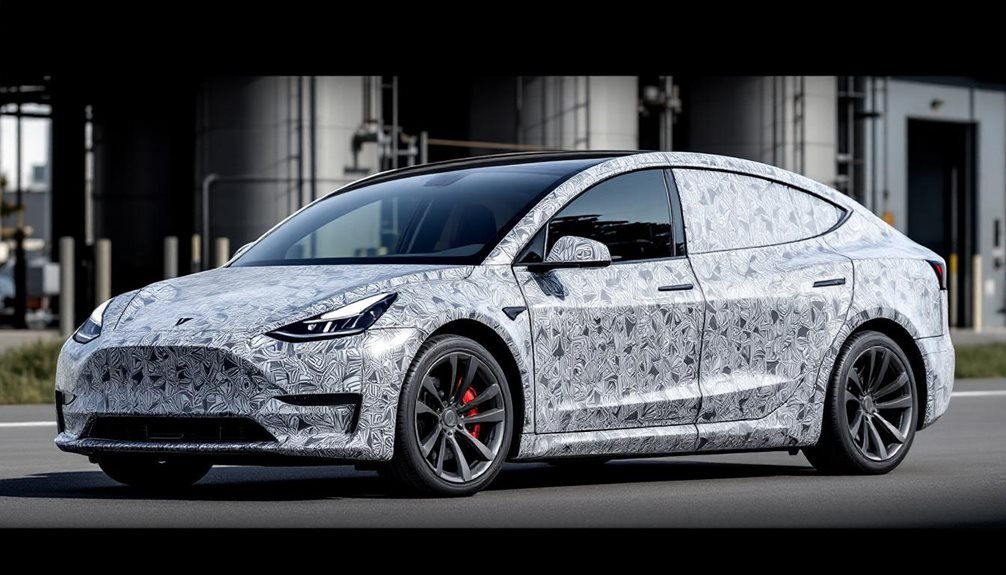
Ambition drives Tesla’s push into artificial intelligence and self-driving cars, creating what could become the company’s most significant business. Cathie Wood, a famous investor, thinks Tesla could become the world’s largest AI project. She predicts robotaxi revenue might reach $8-10 trillion within ten years. Elon Musk agrees with her vision.
Tesla’s robotaxi ambitions could transform it into the world’s largest AI project, potentially generating trillions in revenue.
Tesla’s building massive AI infrastructure. The company’s Cortex data center in Austin now has about 67,000 Nvidia H100 AI chips. Every Tesla vehicle contains a special AI chip that’s so powerful the government won’t let Tesla export it without changes. The company’s testing robotaxis in the San Francisco Bay Area with human drivers for now.
The Cybercab, Tesla’s purpose-built robotaxi without steering wheels or pedals, should start production in 2026. Tesla’s expanding its Austin pilot program to limited users. Musk says they’ll remove human supervisors “in a couple of weeks.” Personal Tesla owners might add their cars to the robotaxi fleet by 2025 if regulations allow it. Tesla plans to achieve a 5 to 10-second build time for future robotaxis, dramatically faster than their current 30-second car assembly process.
Tesla faces several challenges. California requires human supervision in robotaxis, which delays full self-driving. Texas has easier rules than California. The Cybercab won’t arrive until 2026, which might let competitors catch up. Tesla’s stock fell after recent earnings reports, showing investors worry about the company’s execution. Revenue dropped in the steepest decline in a decade, adding to investor concerns.
Competition’s heating up. Traditional carmakers like Porsche struggle with old business models while Tesla bets everything on AI. Ford’s teasing a “Model T moment” for electric vehicles on August 11. Musk praised Nvidia’s Jensen Huang, showing the pressure to stay ahead in AI technology.
Tesla’s robotaxi success matters because regular electric vehicle sales aren’t growing fast enough. The company needs this new revenue stream. Wood’s $8-10 trillion market projection depends on Tesla utilizing lots of robotaxis using its existing infrastructure. The Cybercab’s designed for low costs and heavy use in ride-sharing. Tesla’s autonomous driving system has collected nine billion miles of real-world data to continuously refine safety performance.
If Tesla succeeds, it won’t just be a car company anymore. It’ll be an AI and transportation services giant. That’s what should worry rivals who still think they’re just competing against another automaker.