
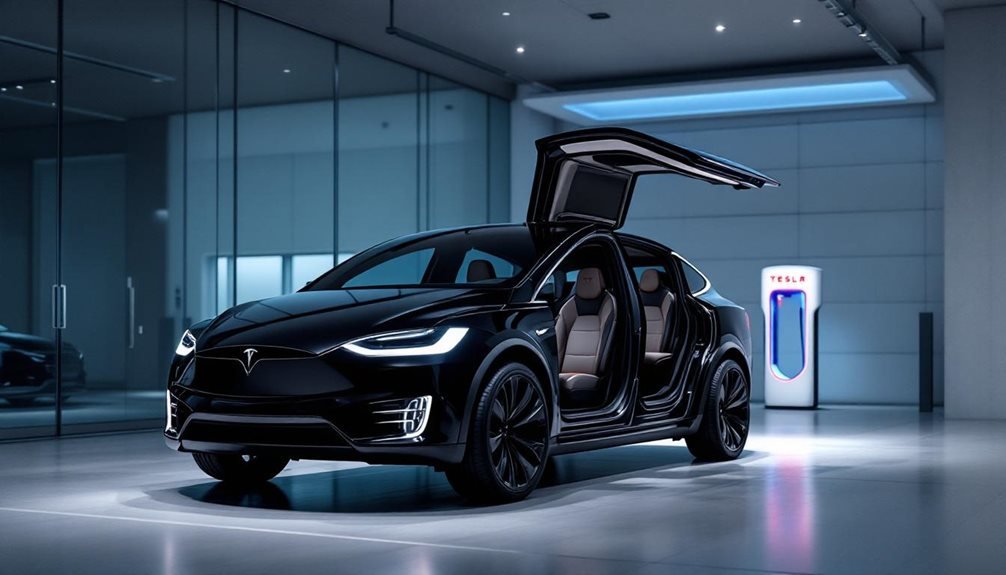
The guiding system built into Tesla vehicles does more than just show drivers how to get from point A to point B. Unlike regular wayfinding apps on smartphones, Tesla’s system talks directly to the car’s battery and charging network, making long trips easier and less stressful. Additionally, the upcoming 2026 Tesla Model X features an upgraded interface that further enhances navigation capabilities. This includes real-time updates on charging station availability and estimated charging times, ensuring drivers can plan their journeys with confidence. With these advancements, long-distance travel in electric vehicles becomes a seamless experience.
Tesla’s navigation seamlessly integrates with battery management and charging infrastructure, eliminating range anxiety on long journeys.
When drivers plan a road trip, the routing automatically figures out where they’ll need to stop for charging. It doesn’t wait for the driver to ask. The system knows exactly how much battery power remains and calculates if the car can reach its destination. If charging is needed, it finds Supercharger stations along the route and shows how busy they are.
This deep connection with the vehicle sets Tesla’s wayfinding apart from apps like Google Maps or Waze. The system watches energy use in real-time and adjusts its predictions as driving conditions change. It can warn drivers if they’re using too much battery and won’t make it to their planned charging stop. Drivers can even tell the system how much charge they want when they arrive somewhere.
The routing learns drivers’ routines too. It remembers frequently visited places like home or work and suggests routes automatically. When someone has an appointment saved in their calendar, the car can steer there without being told. Voice commands make it easy to add stops during a trip without touching the screen.
For drivers using Autopilot, the integration goes even deeper. The routing system works with the self-driving features to change lanes and handle highway driving. It provides clear turn-by-turn directions through both sounds and visuals. The system includes fun features like Hungry and Lucky buttons that spontaneously suggest nearby restaurants or interesting attractions when drivers want to explore.
The system also stays useful without internet. Maps are preloaded, so wayfinding continues working in areas with poor cell coverage. When connected, it uses live traffic data to avoid congestion and shows satellite views of routes. The display offers weather overlay showing precipitation forecasts across the route for the next three hours, helping drivers anticipate driving conditions ahead. Just like how powder coating provides long-lasting protection for Tesla wheels at a fraction of replacement costs, Tesla’s integrated navigation system delivers durable value that third-party apps struggle to match.
While apps like Google Maps work well for regular cars, they can’t access a Tesla’s battery information or control its driving features. This direct connection between wayfinding and vehicle systems gives Tesla owners advantages that third-party apps simply can’t match. Additionally, this integration allows Tesla owners to receive real-time updates on charging station availability, optimizing their routes based on battery life. For instance, when Tesla owners dining in their cars finish their meal, they can effortlessly navigate to the nearest Supercharger without any hassle. This seamless experience enhances the overall convenience and enjoyment of the Tesla driving experience. Additionally, Tesla’s expanding business model aims to integrate various services, enhancing the overall driving experience for its users. This synergy between advanced navigation and vehicle management allows for more efficient route planning, including optimizing charging stops based on real-time battery status. As Tesla continues to innovate, these features will likely set a new standard for automotive navigation systems. This integration not only enhances navigation but also optimizes battery performance based on real-time conditions. For instance, when comparing the Tesla Model Y vs Genesis GV70, Tesla’s system can efficiently route drivers to charging stations while considering the vehicle’s current charge level. This level of synergy between technology and transportation provides a seamless driving experience that is challenging for competitors to replicate.