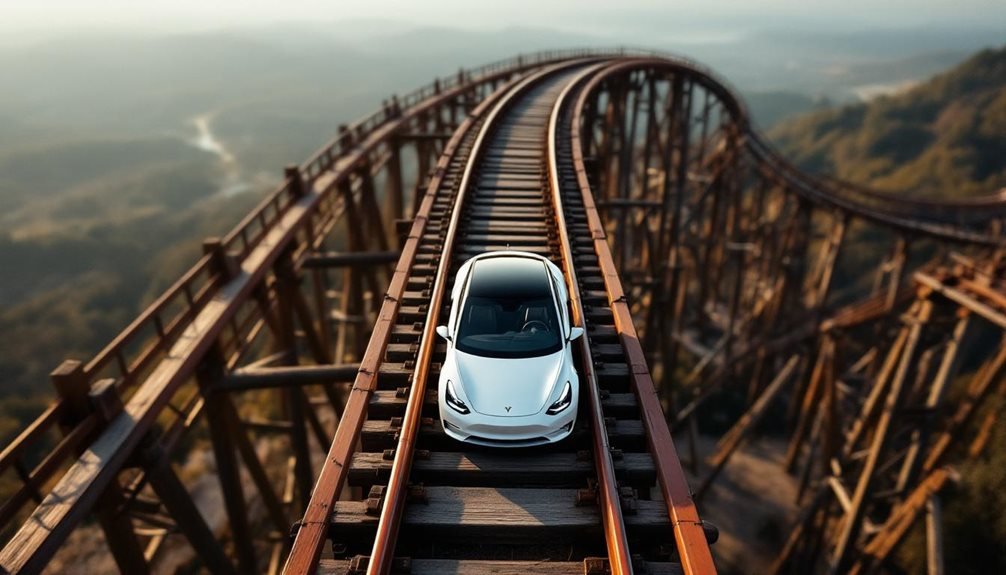

While Tesla’s Model Y has dominated electric vehicle sales charts, its pricing strategy has taken buyers on a wild ride over the past few years. The company’s production costs dropped dramatically from $84,000 per vehicle in 2017 to under $35,000 by 2025. This steep decline came from better materials sourcing, design improvements, and manufacturing innovations. Tesla’s vertical integration approach, which brings component production in-house, contributed significantly to these cost reductions.
Tesla’s global production strategy shifted considerably to manage costs and avoid tariffs. The company moved production from Giga Shanghai to facilities in Austin and Berlin. This change helped Tesla dodge 100% China import tariffs that threatened to make their vehicles too expensive. Giga Berlin‘s location proved especially beneficial, enabling cheaper shipping to Canada and Europe.
Tesla shifted production from China to Austin and Berlin facilities to dodge steep import tariffs and reduce shipping costs.
The automaker faced growing competition in China, where its market share fell to 10.4% despite the Model Y maintaining its position as the top-selling EV. Rising competitors pushed Tesla to focus on affordability through aggressive cost-cutting measures. Despite the Model Y being the best-selling car in China in both 2023 and 2024, Tesla’s market share declined from 11.7% to 10.4%.
Project E41 represents Tesla’s latest attempt to reduce prices. This stripped-down Model Y variant will cost 20% less to produce when it launches in 2026. The company removed features like rear screens, premium acoustic glass, and high-end audio systems. They’re replacing leather with textile seats and simplifying climate controls. Tesla plans to build these vehicles on existing production lines to avoid new capital costs.
Current Model Y pricing reflects these production changes. The base rear-wheel-drive version costs $44,990 in the United States as of February 2025. Canadian buyers saw dramatic price swings, with costs reaching $649.90 CAD before a $20,000 CAD discount once production shifted from China to Germany.
Tesla’s pricing rollercoaster stems from multiple factors working simultaneously. Trade wars forced production relocations. Manufacturing efficiency improved costs per vehicle. Competition required aggressive pricing strategies. The company balanced these pressures while maintaining profitability.
February 2025 marked Tesla’s first coordinated production upgrade across all factories. This unified approach optimized processes and reduced overhead costs. As Tesla prepares cheaper variants and continues improving efficiency, buyers can expect more price adjustments ahead.